


Ensure availability and sustainable management of water and sanitation for all
SDG 6 Indicator
6.3 – Water usage and care
6.3.5 – Water-conscious planting Plant landscapes to minimize water usage. (e.g. use drought-tolerant plants)
Universiti Kebangsaan Malaysia (UKM) is committed to sustainable landscaping practices that align with SDG 6, particularly in minimizing water usage across the campus. As part of this commitment, UKM has implemented water-conscious planting strategies that significantly reduce the need for frequent watering, thereby conserving water resources. The key initiatives that are available at UKM are listed below.
Summary of the Water-conscious planting Plant landscapes Programs
| No | Water-conscious planting Plant landscapes Programs |
|---|---|
| 1 | Drought-Tolerant Planting |
| 2 | Vertical Landscaping Design |
1. Drought-Tolerant Planting
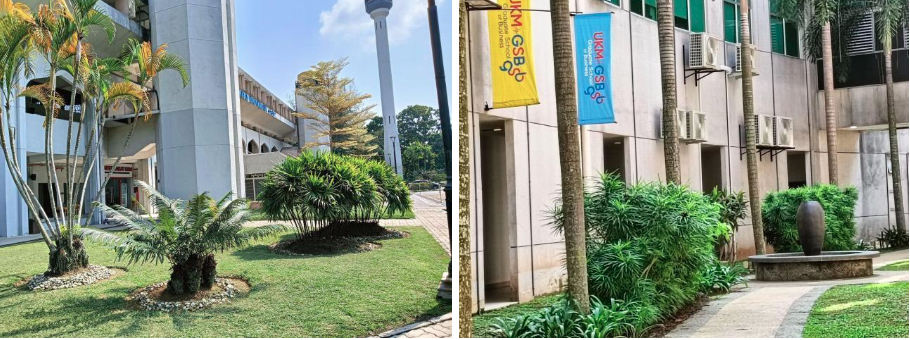
UKM also incorporates innovative landscaping practices to conserve water. For instance, Cycad trees are strategically planted across the campus due to their natural ability to conserve water, reducing the need for frequent irrigation.
UKM prioritizes the use of drought-tolerant plants in its landscaping efforts to minimize water consumption. These plants are specifically chosen for their ability to thrive with minimal water, thereby contributing to the sustainability of the campus environment. Examples include:
- Aloe Vera: Planted in Taman Ilmu and the STEM, Media, and Language Research Laboratory, aloe vera is a resilient plant known for its low water requirements.
- Rosemary: This herb is another drought-tolerant plant used in the landscaping of the STEM, Media, and Language Research Laboratory.
- Cycads : Planted along various landscapes at UKM, cycads are naturally water-conserving plants that require infrequent watering.
These plants play a key role in UKM’s sustainable landscaping efforts, minimizing water usage while maintaining the natural beauty of the campus. Through a combination of water-conscious plant selection and ongoing public awareness initiatives, UKM exemplifies its commitment to sustainability.

2. Vertical Landscaping Design
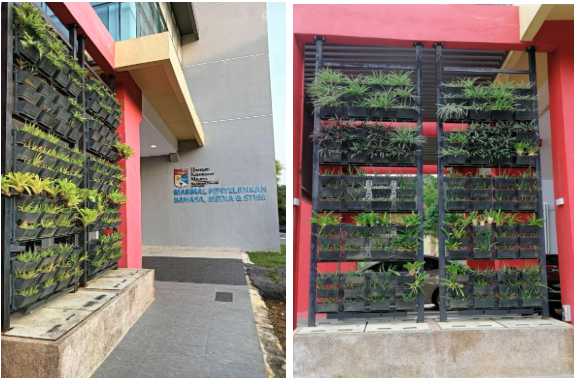
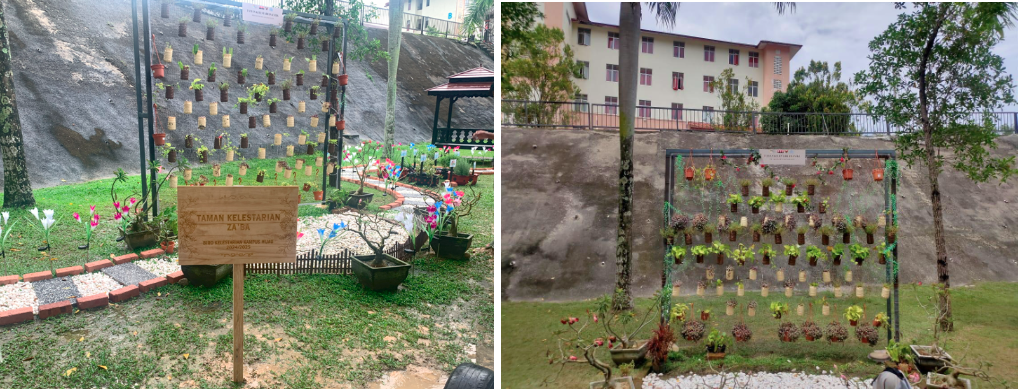
To further enhance water conservation, UKM employs vertical landscaping designs in specific areas of the campus. This innovative approach not only optimizes space but also reduces water usage. For instance, aloe vera plants are arranged vertically in the landscape design at the STEM, Media, and Language Research Laboratory. This method minimizes water consumption while maintaining the aesthetic appeal of the campus.
3. Low-Water-Requirement Plants
Several other plant species that require minimal watering have been selected to beautify the UKM landscape. These include:
- Ixora: A hardy plant that is watered only once a week.
- Furcraea: Known for its robustness and minimal water needs.
- Ruffle Fan Palm: Another species that contributes to the campus’s greenery while requiring limited water.
UKM water-conscious planting initiatives exemplify the university’s dedication to sustainable water management practices. By selecting drought-tolerant species, implementing vertical landscaping designs, and opting for low-water-requirement plants, UKM effectively reduces water consumption while maintaining a lush, green campus environment. These efforts reflect UKM’s ongoing commitment to SDG 6 and its proactive approach to conserving vital water resources.