

Ensure availability and sustainable management of water and sanitation for all
SDG 6 Indicator
6.4 – Water reuse
6.4.2 – Water Reuse Measurement
Universiti Kebangsaan Malaysia (UKM) actively measures and implements water reuse initiatives across the university. As part of the UKM Sustainability Strategic Plan 2030, the university is dedicated to enhancing water reuse through several key programs. Among them is the Lake Water Recycling Program, which treats and reuses water from campus lakes for irrigation and landscaping purposes, thereby reducing dependence on treated municipal water. Additionally, the Rainwater Harvesting Program collects and stores rainwater from building rooftops for non-potable uses such as cleaning, gardening, and flushing systems. These initiatives are regularly monitored to track water savings and ensure effective reuse practices, reflecting UKM’s commitment to sustainable water management and environmental responsibility.
Summary of the measures and implements water reuse initiatives on campus
| No | Measures and implements water reuse initiatives |
|---|---|
| 1 | UKM’s Sustainability Strategic Plan 2030 |
| 2 | Lake water recycling programs |
| 3 | Rainwater Harvesting Programs |
1. UKM’s Sustainability Strategic Plan 2030
UKM is dedicated to enhancing water reuse across its campus as part of its Sustainability Strategic Plan 2030. This plan, which is structured around five sustainability pillars, emphasizes the creation of a Sustainable Campus, with a key focus on optimizing water resource management. The strategy aims to expand the use of recycled water through the improved management of treated water, rainwater and reservoir water.
UKM’s water reuse initiative supports its sustainability commitment by reducing potable water consumption and repurposing water for non-potable uses like irrigation, landscaping, and toilet flushing. This approach minimizes UKM’s environmental impact and promotes efficient water management. Regular monitoring and assessments ensure water quality, optimize consumption, and reduce pollution, reinforcing UKM’s dedication to resource conservation.
In UKM’s Sustainability Strategic Plan 2030, which outlines specific goals to optimize the use of water across the campus. This program not only supports UKM’s efforts to conserve water but also aligns with the broader global movement towards sustainable water management. Through its water recycling program, UKM continues to demonstrate leadership in environmental stewardship and resource efficiency
Link: www.ukm.my/kelestarian/sustainability-strategic-planning/strategic-plan-2030

Listed below are other UKM initiative programs to recycle water.
2. Lake water recycling program
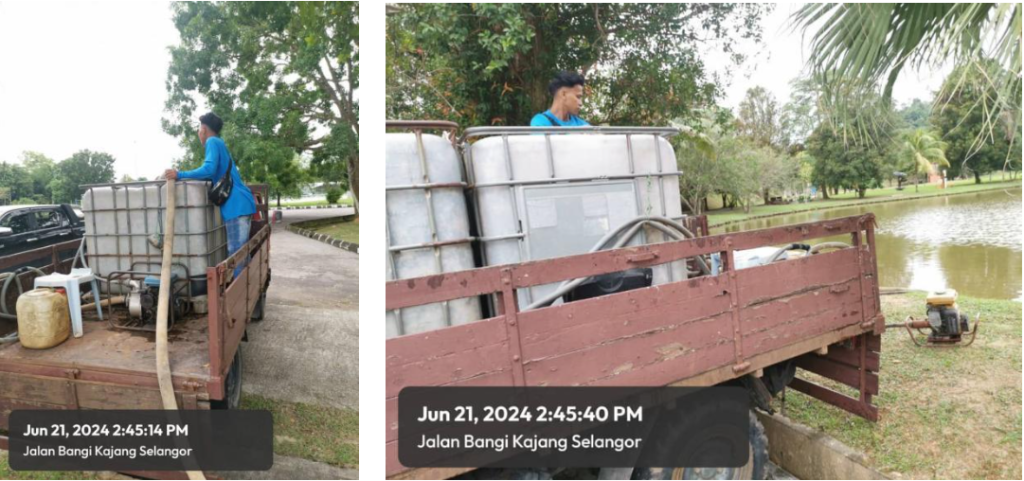
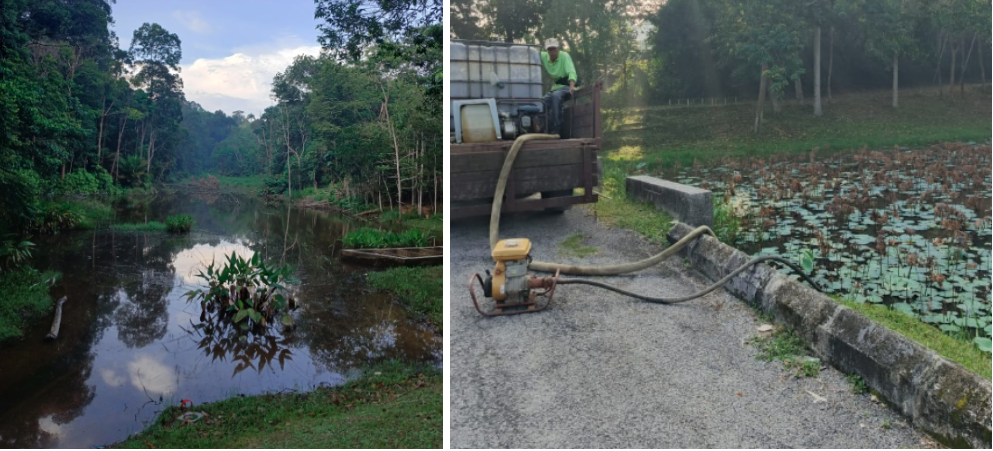
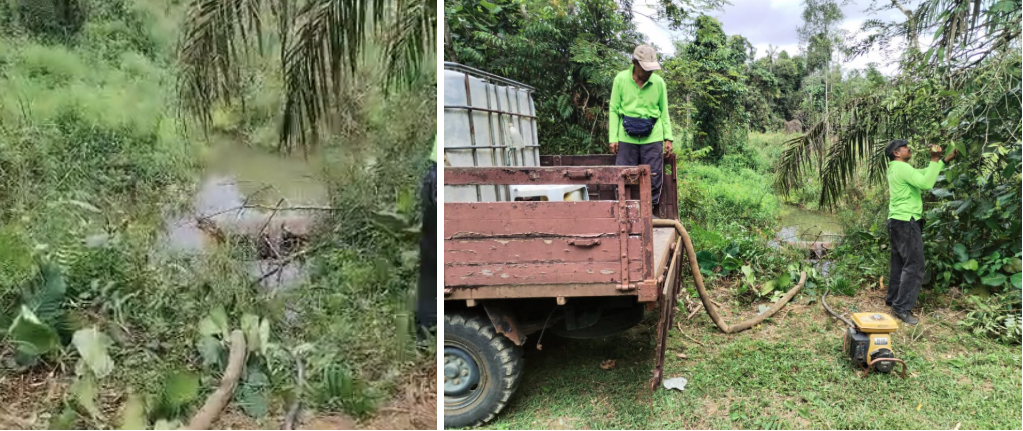
A significant example of UKM’s water reuse initiative is the repurposing of water collected from the Ghazali Lake, the Faculty of Science and Technology (FST), Faculty of Engineering and Built Environment (FKAB) Lake, Kesatria Lake UKM, Danau Lake UKM and Faculty of Information Science and Technology Lake UKM (3,679,948.91 gallons). This water is primarily used for irrigating the campus landscape, thereby reducing the need for additional freshwater resources.


https://drive.google.com/file/d/1jrpET_N_NkzYsSWieJMIYwrm9KvdRuJo/view
3. Rainwater Harvesting Program
The Rainwater Harvesting Program at UKM is a key sustainability initiative aimed at collecting and utilizing rainwater for various purposes, including irrigation, non-potable water supply and toilet flushing. By capturing and reusing rainwater, UKM reduces its reliance on conventional water supply systems, conserves valuable water resources and promotes eco-friendly water management practices. The total water volume collected from the Rainwater Harvesting Program at UKM is approximately 7,586 gallons.
Rainwater harvesting systems are strategically installed at several locations across the UKM campus. For instance, the UKM Mosque utilizes harvested rainwater for ablution purposes, as illustrated in Figure below, significantly reducing potable water consumption. Similarly, rainwater harvesting systems in residential areas at UKM Bangi are used for toilet flushing further enhancing water conservation efforts.

Rainwater harvesting for toilet flushing is an efficient and sustainable method to conserve water and reduce utility costs. At UKM Bangi, the harvested rainwater is utilized specifically for toilet flushing, significantly decreasing the reliance on potable water sources. This initiative helps conserve valuable water resources while promoting environmentally responsible practices.

