


Ensure access to affordable, reliable, sustainable and modern energy for all
SDG 7 Indicator
7.4 – Energy and the community
7.4.2 – 100% Renewable Energy Pledge
Universiti Kebangsaan Malaysia (UKM) actively promotes a public pledge toward achieving 100% renewable energy beyond the university. In line with the UKM Sustainability Policy 2030, the university has committed to reaching 100% Renewable Energy by 2050 as part of its long-term environmental goals. UKM demonstrates this commitment through national and international platforms, such as the 2nd International Conference on Sustainable Renewable and Energy Efficiency (ICSREE 2024) and the 1st International Symposium on Solar H₂ (SSH2024). These events serve as key platforms for promoting renewable energy awareness, collaboration, and innovation, engaging stakeholders from academia, industry, and government sectors. Through such initiatives, UKM not only strengthens its internal sustainability agenda but also advocates for a broader societal transition toward clean and renewable energy solutions.
Summary of the program promote a public pledge toward 100% renewable energy
| No | 100% renewable energy promotion programs |
|---|---|
| 1 | UKM Sustainability Policy 2030 |
| 2 | UKM Sustainability Strategic Plan 2030 |
| 3 | 2nd International Conference on Sustainable Renewable and Energy Efficiency (ICSREE 2024) |
| 4 | 1st International Symposium on Solar H2 (SSH2024) |
1. UKM Sustainability Policy 2030
Universiti Kebangsaan Malaysia (UKM) is committed to achieving a 100% Renewable Energy Pledge by 2050 as part of its UKM Sustainability Policy 2030. This ambitious goal is rooted in transitioning campus operations entirely to renewable energy sources, minimizing reliance on fossil fuels, and advancing environmental stewardship within higher education.
The 100% Renewable Energy Pledge at UKM:
- Renewable Energy Transition: UKM is focusing on increasing renewable energy sources, such as solar power, biomass, and other clean energy technologies, across its campus facilities. This includes ongoing solar installations on rooftops and other renewable projects.
- Energy Efficiency Initiatives: To reduce energy demand, UKM is upgrading infrastructure to be more energy-efficient, including LED lighting, HVAC improvements, and a robust Building Management System (BMS) to optimize energy use in real-time.
- Research and Innovation: UKM is investing in research on future renewable energy technologies, such as hydrogen energy, and building partnerships with industry leaders to foster innovation in sustainable energy solutions.
- Educational Integration: The pledge also emphasizes educating the university community on sustainable practices and the importance of renewable energy. This includes embedding sustainability principles into the curriculum and conducting workshops and programs focused on renewable energy and conservation.
- Carbon Reduction Goals: This 100% Renewable Energy Pledge aligns with UKM’s Zero Carbon Campus 2050 target, aiming to drastically reduce greenhouse gas emissions, contributing to a cleaner, more sustainable future for the university and beyond.
Through this pledge, UKM demonstrates a leadership role in sustainable development and sets a powerful example for institutions globally by committing to a renewable, eco-friendly future that aligns with the United Nations’ Sustainable Development Goals (SDGs).
https://drive.google.com/file/d/1vgtfjC2HMoGnDElREWC_BiAD5jTTTZhg/view?pli=1
2. UKM Sustainability Strategic Plan 2030
i. Developing a policy on saving and affordable energy
As part of its commitment to the 100% Renewable Energy Pledge, UKM is enhancing building energy efficiency with a comprehensive policy on energy savings and affordability. This policy provides clear guidelines for implementing energy-efficient practices across campus, including using sustainable materials, advanced energy-saving technologies, and renewable energy sources in building upgrades. Prioritizing cost-effective measures such as LED lighting, optimized HVAC systems, and automated energy management, this policy ensures long-term savings and environmental benefits. It also supports continuous monitoring and evaluation of energy usage, enabling UKM to track progress and make data-driven adjustments in real time. By formalizing its commitment to energy savings and affordability, UKM is creating a sustainable, cost-effective campus that aligns with its renewable energy goals and sets a benchmark for carbon footprint reduction in higher education (page 38).
ii.Upgrading facilities based on energy saving equipment
In line with its 100% Renewable Energy Pledge, UKM is upgrading its facilities with advanced energy-saving equipment to boost energy efficiency and reduce environmental impact. This initiative includes replacing outdated systems with high-efficiency alternatives, such as LED lighting, low-energy HVAC systems, and automated building controls that adjust energy use based on real-time needs. By installing solar panels and other renewable energy sources on rooftops, UKM is reducing reliance on external power and increasing its renewable energy capacity. The university’s investment in smart energy management systems ensures optimized operation, minimizes waste, and reduces operational costs, contributing to UKM renewable energy goals. These upgrades showcase UKM’s dedication to a sustainable campus and leadership in energy-efficient practices, setting a high standard for institutions in Malaysia and beyond (page 38).
iii. Upgrading energy management
As part of its 100% Renewable Energy Pledge, UKM is significantly enhancing energy efficiency through comprehensive upgrades in energy management across campus. The implementation of a Centralized Energy Management System (CEMS) allows UKM real-time control and monitoring of energy consumption in all buildings. This system enables precise adjustments in heating, cooling, and lighting based on occupancy and environmental conditions, ensuring optimal energy use and reducing unnecessary consumption. Incorporating predictive analytics, these energy management upgrades forecast demand, allowing for proactive maintenance and efficiency improvements. Smart meters integrated into the system provide detailed data on energy usage, identifying areas for further optimization and quickly addressing energy leaks. Through these advancements, UKM achieves substantial energy and cost savings, aligning with its renewable energy pledge, fostering a culture of sustainability, and reinforcing its leadership in building a low-carbon, sustainable campus (page 39).

Source: www.ukm.my/kelestarian/data/publications/UKM-SUSTAINABILITY-STRATEGIC-PLAN-2030.pdf
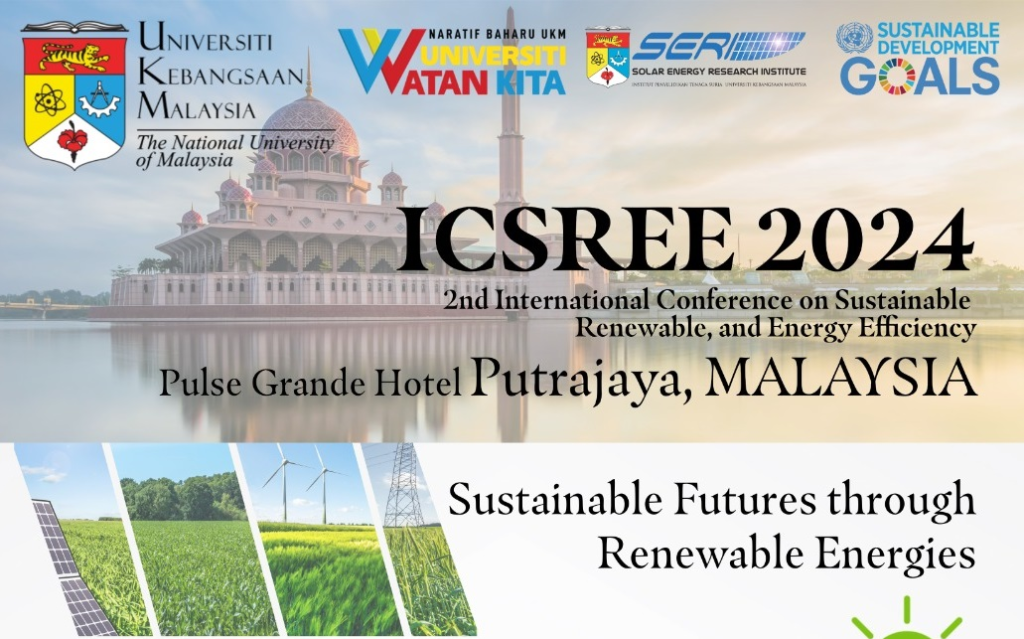
3. 2nd International Conference on Sustainable Renewable and Energy Efficiency (ICSREE 2024)
On 7-8 August 2024, the 2nd International Conference on Sustainable Renewable and Energy Efficiency (ICSREE 2024), organized by the Solar Energy Research Institute (SERI), brought together a diverse range of participants from academia, industry, and government to foster collaboration and knowledge sharing in the field of sustainable energy. This international platform was supported by leading institutions including SERI and Selfuel from Universiti Kebangsaan Malaysia (UKM), the Institute of Nano Optoelectronics Research & Technology (INOR) from Universiti Sains Malaysia, University of Technology and Applied Sciences (Oman), Southeast University (Bangladesh), and Universitas Indonesia. Industry partners such as Business Events Sarawak, Integrated Environmental Solution (IES), Malaysia Green Building Council (MGBC), Uzma Berhad, Solarvest Holdings Berhad, Novasource Power Services, H2 Energy Sdn Bhd, and IESVE Singapore PTE LTD also played a vital role in the event. Additionally, the conference received support from the Sustainable Energy Development Authority (SEDA), reflecting strong governmental commitment to advancing renewable energy and energy efficiency initiatives. The program was aimed to raise awareness in the field of renewable energy and facilitate the sharing of experiences and knowledge among professionals, academics, and researchers from various countries.Participants will present their research findings and case studies in renewable energy, and these presentations will be published in international journals.
Source: www.ukm.my/icsree
4. 1st International Symposium on Solar H2 (SSH2024)
The Solar Hydrogen Research Group, part of the Fuel Cell Institute-Higher Education Center of Excellence (HICoE) at UKM, has organised the 1st International Symposium on Solar Hydrogen (SSH2024) on September 9th-10th 2024. This eagerly anticipated conference, set to host over 100 participants, will take place in person and will center around the convergence of various fields and applications within solar and hydrogen technology, with a particular focus on materials and systems. The symposium explores the fields of green and renewable energy, addressing vital aspects of sustainable technology. SSH2024 aims to facilitate the gathering of scholars, researchers, scientists, practitioners, and students engaged in the solar and hydrogen technology domain. The primary objective is to foster discussions on novel developments, innovative concepts, best practices, and real-world experiences.
SSH2024 is designed to cover a broad spectrum of topics, including Solar Hydrogen for Systems, Hydrogen Technology, Materials, Life-cycle Analysis & Economy, and Miscellaneous areas encompassing green technology, renewable energy, nanotechnology, and more. Join us in exploring and advancing the frontiers of solar and hydrogen technology at this landmark symposium.
Source: www.ukm.my/ssh/program
