


Make cities and human settlements inclusive, safe, resilient and sustainable
SDG 11 Indicator
11.4 – Sustainable practices
11.4.2 – Promote Sustainable Commuting
Universiti Kebangsaan Malaysia (UKM) implements coordinated transport services, institutional policies and digital support to encourage a shift from private vehicles to sustainable commuting, supporting its target of 70% sustainable travel by 2030. Key actions include campus shuttle services and electric buses, public bus connections to UKM Komuter and MRT Kajang, bicycle-sharing facilities, university transport for group journeys and Park and Ride arrangements during major events. The MyUKM Smart Bus application supports journey planning through real-time bus tracking, arrival estimates, and route information. These alternatives are reinforced by restrictions on first-year students bringing personal vehicles, subject to approved exceptions and progressively higher sticker fees for additional vehicles. Together, these measures address both the availability of sustainable travel options and the management of private vehicle use. These initiatives are summarised in the list of UKM’s Sustainable Practices Targets below, outlining the university’s actions to achieve 70% sustainable commuting by 2030.
Table shows UKM’s Sustainable Practices Targets
| No. | Practices |
|---|---|
| 1. | UKM is Accessible via Public Transportation |
| 2. | Encouraging the use of university vehicles |
| 3. | Carbon Emission Fee (Vehicle Sticker) |
| 4. | Prohibition on First Year Students on bringing personal vehicles |
| 5. | Ride Bicycles services for Students. |
| 6. | Park and Ride Service |
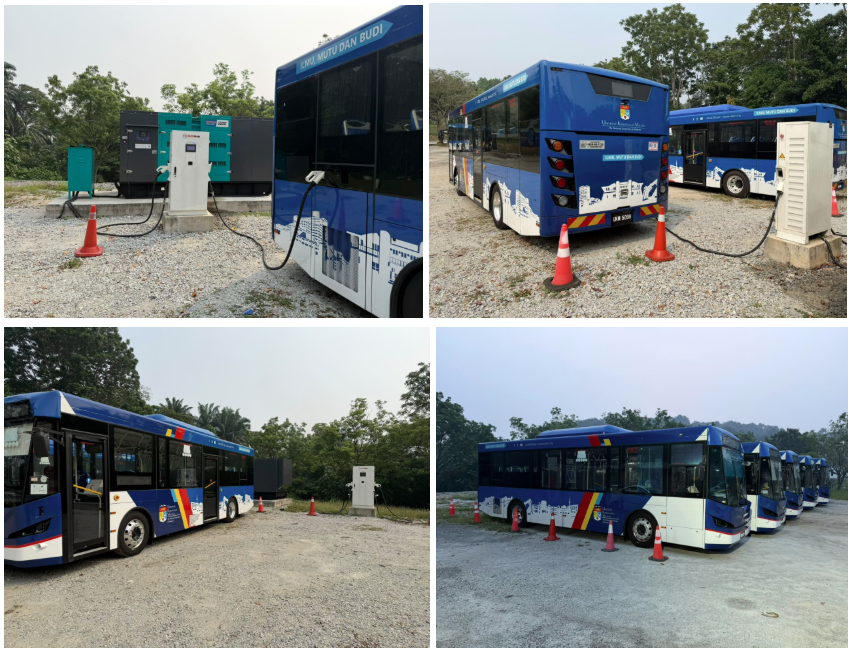
| 7. | Zero Emission Vehicles (ZEV) |
| 8. | MyUKM Smart Bus |
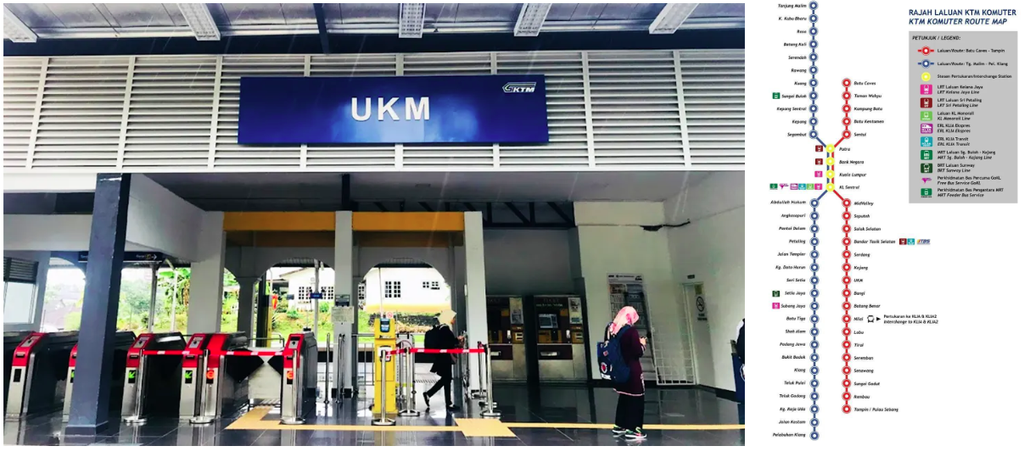
1. UKM is Accessible via Public Transportation
There are various modes of public transportation such as buses and trains, available for both UKM staff and students. MRT Kajang and UKM Komuter station are the nearby train stations situated close to the campus area which can be reached via the RapidKL public bus. In addition, the students have established a ride-sharing Telegram group where students communicate about their transportation needs within as well as outbound the campus area.

2. Encouraging the use of university vehicles
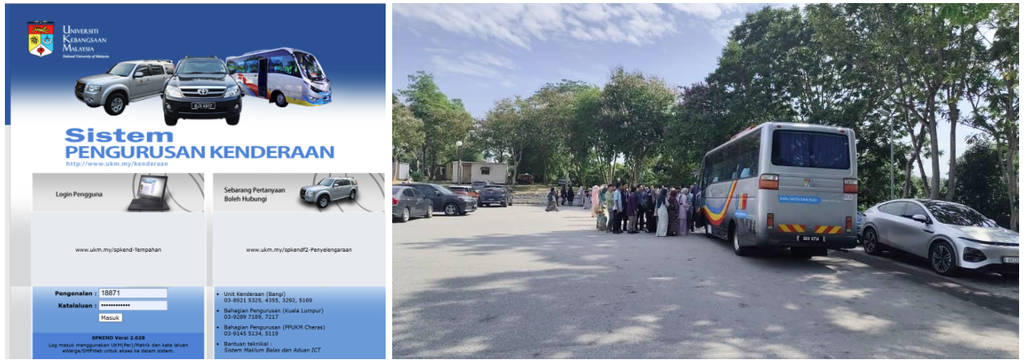
UKM provides transportation facilities for its community members, including both staff and students. Staff or students who need to attend group activities or events outside the campus may apply to use the transportation services provided by the university. UKM provides a system for vehicle booking, and students or staff can submit their requests through this system.
3. Carbon Emission Fee (Vehicle Sticker)
UKM implements a carbon emission fee for fossil fuel vehicles by setting high fees for vehicle stickers and limiting their availability, aiming to reduce private car usage on campus. In 2022, UKM developed the Universiti Kebangsaan Malaysia Regulations (TRAFFIC) 2022, which clearly outlines the guidelines regarding traffic at UKM. The regulation explicitly restricts first-year students from bringing vehicles to campus, allowing limited exceptions only for those with valid, essential needs. Additionally, sticker fees increase progressively for staff and students with multiple vehicles, reinforcing UKM’s commitment to sustainability and carbon emission reduction.


4. Prohibition on First Year Students on bringing personal vehicles
UKM promotes sustainable commuting by prohibiting first-year students from bringing personal vehicles onto campus, subject to approved exceptions for essential needs, under the Universiti Kebangsaan Malaysia (Traffic) Regulations 2022. The Security Division communicates and enforces this restriction through official notices, allowing affected students time to return their vehicles home and issuing summonses for non-compliance.
By managing private vehicle access from the start of university life, UKM encourages students to adopt campus buses, shared transport, cycling, and walking as everyday travel options. This measure supports efforts to reduce traffic congestion, parking demand, and transport-related emissions while advancing UKM’s target of 70% sustainable commuting by 2030.

5. Ride Bicycles services for Students
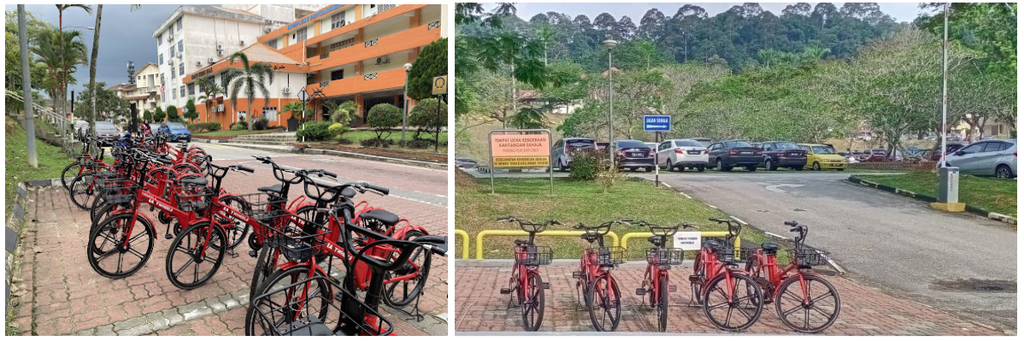
UKM has strict rules on students driving on campus. Because of that, UKM offers a “Ride Bicycle” initiative to encourage sustainable transportation among students, providing a convenient and eco-friendly alternative to motorized vehicles on campus. This program aims to reduce carbon emissions, promote physical activity and alleviate traffic congestion within the university. Bicycles are strategically placed across the campus, allowing students to easily access them for short commutes between facilities. This initiative aligns with UKM’s commitment to sustainability and contributes to creating a greener campus environment.
6. Park and Ride Service
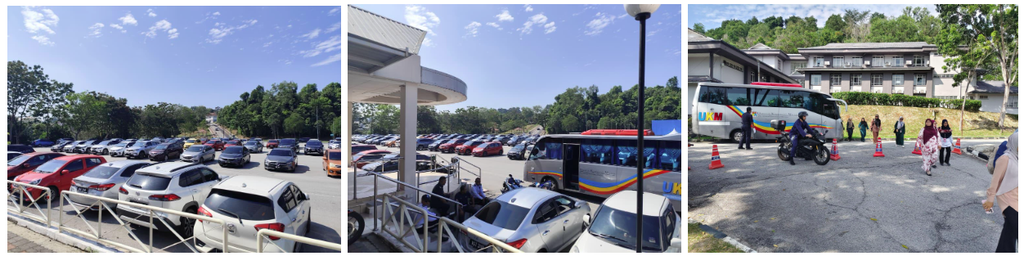
Universiti Kebangsaan Malaysia (UKM) implements a Park and Ride Programme during major events that are expected to generate high traffic volumes. Participants are required to park their vehicles at designated parking areas outside the event venue and are transported to the event location using university-provided shuttle buses. By reducing the number of individual vehicles circulating within the campus, the programme helps decrease fuel consumption, traffic congestion, and direct emissions from transportation activities, contributing to lower Scope 1 emissions and supporting UKM’s sustainable mobility initiatives.
7. Zero Emission Vehicles (ZEV)
UKM strengthened its commitment toward achieving a Zero Emission Campus through the introduction of electric buses as the primary mode of on-campus transportation. This initiative marks a major step in UKM’s long-term goal to transition to Zero Emission Vehicles (ZEVs) across all campus operations. With ten electric buses now operating within the Bangi campus, UKM has established a cleaner, quieter and more efficient mobility system that significantly reduces greenhouse gas emissions and supports a healthier campus environment. The initiative not only provides a sustainable and convenient commuting option for students and staff but also demonstrates UKM’s proactive leadership in integrating innovation, green technology and environmental responsibility into daily campus life. This effort aligns with the UKM Sustainability Strategic Plan 2030 and Malaysia’s aspiration to achieve Net Zero Carbon by 2040, reinforcing UKM’s position as a national model for low-carbon and sustainable university transportation systems. Through this milestone, UKM continues to inspire a culture of sustainability and serve as a living laboratory for future-ready green mobility solutions.
7. MyUKM Smart Bus
The MyUKM Smart Bus app is a dedicated mobile application developed to enhance campus mobility at UKM. It provides real-time tracking of UKM shuttle buses, enabling students, staff and visitors to view live bus locations, estimated arrival times and designated routes across the campus. By offering accurate and up-to-date information, the app helps users plan their journeys efficiently, reduce waiting times and encourage the use of public campus transport instead of private vehicles. Available on the Google Play Store, the MyUKM Smart Bus app supports UKM’s vision of a smart, sustainable and low-carbon campus, aligning with the university’s broader efforts toward digital transformation and environmentally friendly transportation solutions.
UKM actively promotes sustainable commuting as part of its goal to achieve 70% sustainable travel by 2030. The university encourages the use of public transportation, carpooling, walking and cycling to reduce carbon emissions and traffic congestion. Facilities such as the Park and Ride service, bicycle-sharing program and university vehicle system support low-carbon mobility across the campus. Additionally, UKM enforces the Universiti Kebangsaan Malaysia (Traffic) Regulations 2022, which restrict first-year students from bringing personal vehicles and introduce a carbon emission-based sticker fee system to discourage excessive vehicle use. Through awareness campaigns, institutional policies and sustainable transport infrastructure, UKM fosters a culture of eco-friendly commuting that not only reduces its environmental footprint but also sets an example of responsible mobility for the wider community.

Collectively, UKM translates its sustainable commuting commitment into practical, institution-led actions. By combining shared and electric transport, cycling opportunities, public transport connectivity, digital journey planning and vehicle-access controls, UKM makes alternatives to private vehicle use more accessible and convenient. This integrated approach encourages lasting changes in travel behaviour and supports efforts to reduce congestion, parking demand and commuting-related emissions, advancing UKM’s 70% sustainable commuting target by 2030 and contributing to SDG 11: Sustainable Cities and Communities.