

Make cities and human settlements inclusive, safe, resilient and sustainable
SDG 11 Indicator
11.2 – Support of arts and heritage
11.2.6 – Record and Preserve Cultural Heritage
Universiti Kebangsaan Malaysia (UKM) delivers institutional projects to record, preserve, revitalise and transmit intangible cultural heritage, including local languages and dialects, oral traditions, literature, customary practices and traditional knowledge. Through the Institute of the Malay World and Civilisation (ATMA), its manuscript research centre, and the Library of the Malay World and Civilisation (PATMA), UKM combines research, documentation, conservation and community engagement with digital innovation. Key examples include the Malay Civilization Portal, offering free worldwide access to 25 heritage databases; the Illustrated Herbal Catalogue from the Tibb Manuscript, documenting traditional Malay medicinal knowledge; manuscript conservation workshops; and Bentara Digital, which uses gamification to engage younger generations with cultural narratives. Documentation of the Segamat dialect and scholarship on Malay-Javanese diaspora traditions further support linguistic diversity and cultural memory. Together, these initiatives connect heritage preservation with public access and intergenerational learning, supporting SDG 11: Sustainable Cities and Communities.
| No. | Type of Projects |
| 1. | International/National Cultural Heritage i. International Conference on Malay Masterpieces (PAKAM 2025) ii. WaRISan Project iii. Malaysia Heritage Tiles iv. The Malay Civilization Portal v. The Schacht Collection vi. The Earliest Manuscript of the Malay World vii. An Illustrated Herbal Catalogue from Tibb Manuscript viii. The Qur’anic Manuscript Decorative Art Coloring Contest ix. Gempita @ Istana Puteri Bongsu x. Islamic Art Exhibition – FUNDUQ 2025 (Selangor Islamic Heritage Festival 2025) xi. Cultural Carnival: Civilizing Cyberjaya xii. Malay Manuscript Codicology Conservation Workshop xiii. International Seminar on Malay-Javanese Studies (SEMEJA IV) 2025 xiv. Bentara Digital: Gamification of Cultural Heritage |
| 2. | Local Cultural Heritage i. First Student Magazine : SEMESTA ii. Tun Ahmad Sarji Collection |
| 3. | Heritage of Displaced Communities i. The Lithograph, Caricature, and Manuscript Gallery, FSSK ii. The Segamat Dialect iii. Javanese Diaspora in Malaysia: Cultural and Language Perspectives |
1. International/National Cultural Heritage
i. International Conference on Malay Masterpieces (PAKAM 2025)
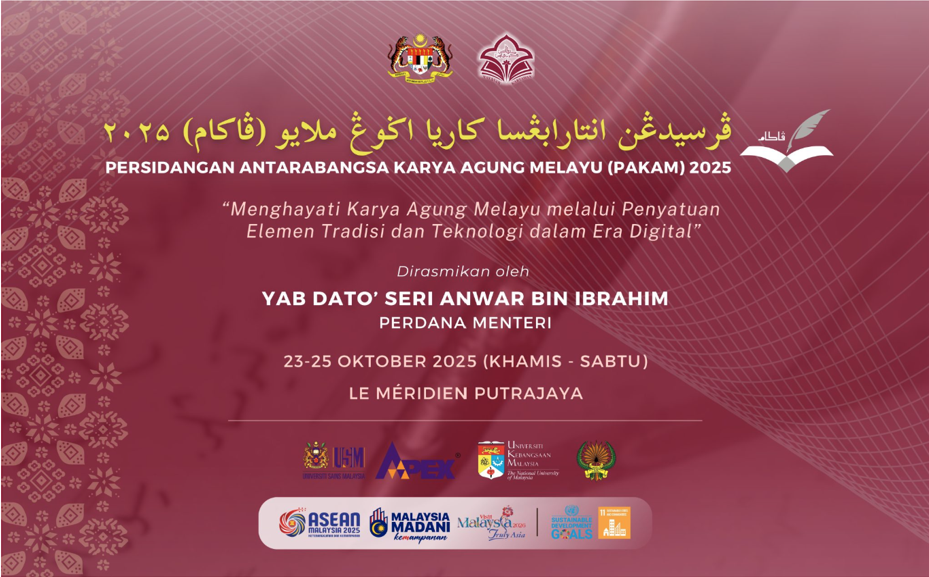
Universiti Kebangsaan Malaysia (UKM), through its Institute of the Malay World and Civilisation (ATMA), delivers initiatives that contribute to the documentation, preservation and transmission of intangible cultural heritage, particularly Malay literary heritage, language, traditions, values and indigenous knowledge.
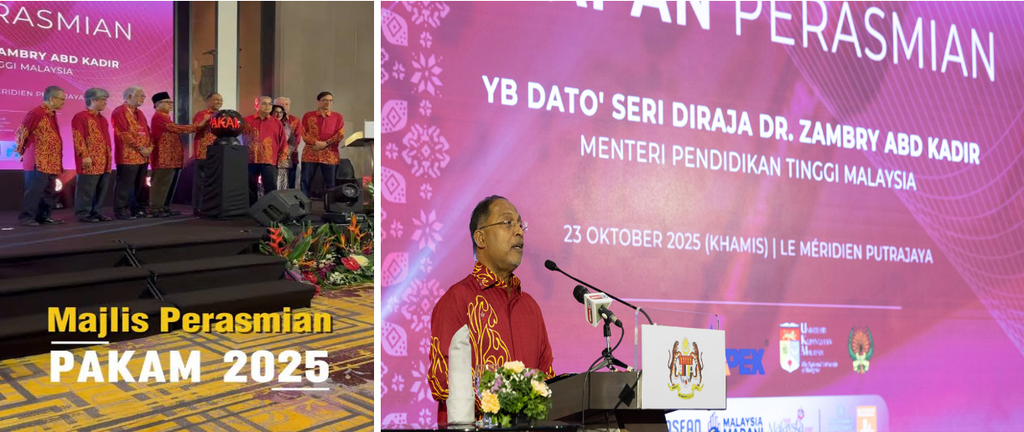
One example is the International Conference on Malay Masterpieces (Persidangan Antarabangsa Karya Agung Melayu – PAKAM) 2025, organised by Yayasan Karyawan in collaboration with ATMA, UKM, together with other national heritage and knowledge institutions. Held from 23–25 October 2025, the conference brought together local and international scholars and researchers to strengthen understanding and scholarship on Malay Masterpieces as an important foundation of Malay civilization.
The initiative contributes to the preservation of intangible cultural heritage by documenting, researching, interpreting and transmitting traditional Malay literary works and the knowledge embedded within them. These works, including pantun, syair and hikayat, preserve important elements of Malay language, cultural values, philosophy, traditions and local wisdom. UKM recognises these literary traditions as an important component of Malay cultural identity and plays an institutional role in strengthening and sustaining Malay culture, language and literary heritage for present and future generations.
Through ATMA’s research, conferences, publications and scholarly activities, UKM therefore contributes to keeping intangible cultural heritage alive by ensuring that traditional knowledge and cultural expressions are studied, recorded, shared and transmitted to new generations, including through contemporary and digital approaches.
Source: https://www.ukm.my/atma/news/persidangan-antarabangsa-karya-agung-melayu-pakam-2025/
ii. WaRiSAN MELAYU
Universiti Kebangsaan Malaysia (UKM), as a university institution, delivers projects that contribute directly to the recording, preservation, enrichment and transmission of Malaysia’s intangible cultural heritage, particularly its language, knowledge and cultural identity.
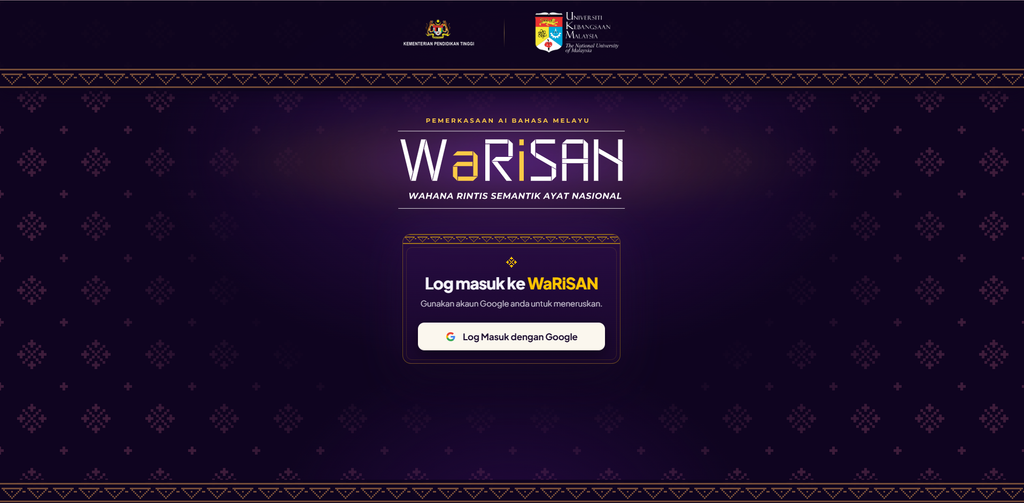
A significant example is WaRiSAN MELAYU (Wahana Rintis Semantik Ayat Nasional), a national-scale initiative led by UKM to strengthen the development and preservation of the Malay language through advanced digital and artificial intelligence technologies. The project focuses on developing an authoritative and systematic Malay-language Large Language Model (LLM), supported by national collaboration, data sovereignty and local linguistic and cultural contexts. Its work encompasses the documentation and enrichment of Malay linguistic knowledge and its application across key domains including language, education, science and technology, medicine and law.
The initiative is particularly significant in the context of intangible cultural heritage because language represents an essential carrier of cultural knowledge, traditions, values and collective identity. By systematically documenting, developing and digitising Malay linguistic resources, WaRiSAN MELAYU contributes to safeguarding this knowledge for future generations and strengthening the position of Malay as a national language, language of knowledge and language of the digital era.
The project also demonstrates strong government–university collaboration and institutional commitment. WaRiSAN MELAYU is led by UKM with collaboration involving national agencies and organisations, including Dewan Bahasa dan Pustaka (DBP), the Malaysian Administrative Modernisation and Management Planning Unit (MAMPU/JDN), RTM and other strategic partners. Most significantly, the project received an allocation of RM8 million under Malaysia’s Budget 2025, demonstrating direct financial support from the Government of Malaysia for the development and preservation of Malay-language resources and capabilities.
This initiative complements UKM’s broader institutional efforts to document and preserve Malaysia’s cultural heritage. UKM has also undertaken projects involving Malay manuscripts, local dialects, traditional knowledge, cultural collections and other forms of heritage documentation. These include the Malay Civilization Portal, the earliest Malay manuscripts, the Segamat dialect, the Lithograph, Caricature and Manuscript Gallery, as well as projects documenting intangible cultural heritage such as traditional food practices and cultural rituals.
Overall, these initiatives demonstrate that UKM actively contributes to the recording, safeguarding, digital preservation and transmission of intangible cultural heritage, while government-supported projects such as WaRiSAN MELAYU provide the necessary resources and national-level infrastructure to ensure that Malaysia’s linguistic and cultural knowledge remains accessible and relevant to future generations.
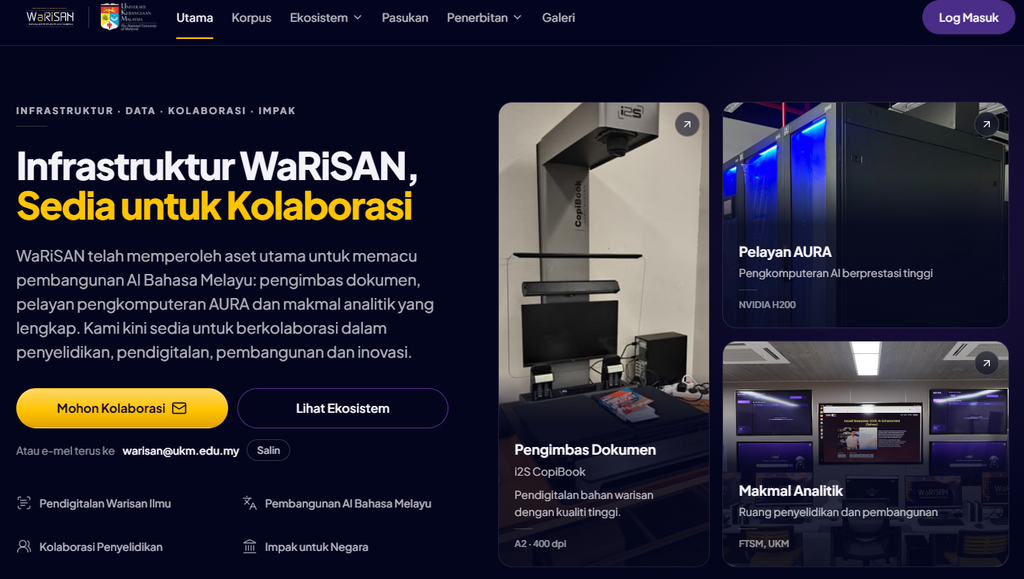
Source: https://www.warisan.ukm.my/
Source: https://www.bharian.com.my/berita/nasional/2024/10/1313468/belanjawan-2025-malaysia-serius-bangunkan-teknologi-ai
iii. Jubin Warisan Malaysia (Malaysia Heritage Tiles)
UKM, through its Institut Alam dan Tamadun Melayu (ATMA) and other academic and research initiatives, delivers projects and activities that contribute to the documentation, preservation and revitalisation of Malaysia’s intangible cultural heritage, including traditional language, literature, oral traditions, cultural practices and indigenous knowledge.
ATMA’s research covers Malay language, literature and linguistics, oral literature documentation, philology, Malay manuscripts, linguistics in the Malay World, and Malay cultural heritage. Its Malay Manuscript Research Centre also undertakes fieldwork, documentation and digitisation of Malay manuscripts, including traditional literature, poetry, language, medicine, arts and other forms of historical knowledge.
A further example is the Malaysian Heritage Tiles collaboration between UKM and GNG Tiles Malaysia. The project draws inspiration from traditional Malaysian motifs and transforms cultural memory and heritage elements into contemporary architectural designs, thereby helping to reinterpret and sustain Malaysian cultural heritage in a modern context.
UKM’s sustainability reporting also identifies projects and collections relating to national and local cultural heritage, as well as the heritage of displaced communities, including the Lithograph, Caricature and Manuscript Gallery and documentation of the Segamat dialect. These initiatives demonstrate UKM’s institutional role in recording, preserving, documenting and promoting cultural heritage and traditional knowledge for future generations.
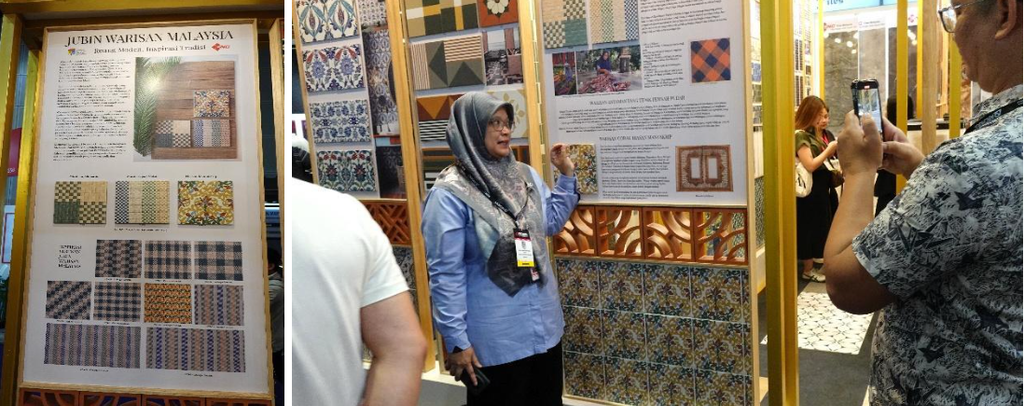
Source: https://terracotta.com.my/jubin-warisan-malaysia-kitchen-bathroom/
https://www.facebook.com/share/p/1DXbqeV7hC/
iv. Malay Civilization Portal
The Malaycivilization Portal is a Big Data platform that serves as a comprehensive database specifically designed to assist researchers and scholars in conducting studies on the Malay World and Civilization. This portal is also accessible to the general public who are interested in exploring Malay intellect and values, as manifested in the philosophy, thought, emotions, behavior, and lifestyle of the Malay world community.
This portal was established as one of the initiatives to preserve the cultural heritage of the Malay world and is freely accessible worldwide. It contains 25 databases, including Sejuta Pantun (A Million Pantuns), Peribahasa Melayu (Malay Proverbs), the N.A. Halim Collection, and the Tenas Effendi Collection.

v. The Schacht Collection
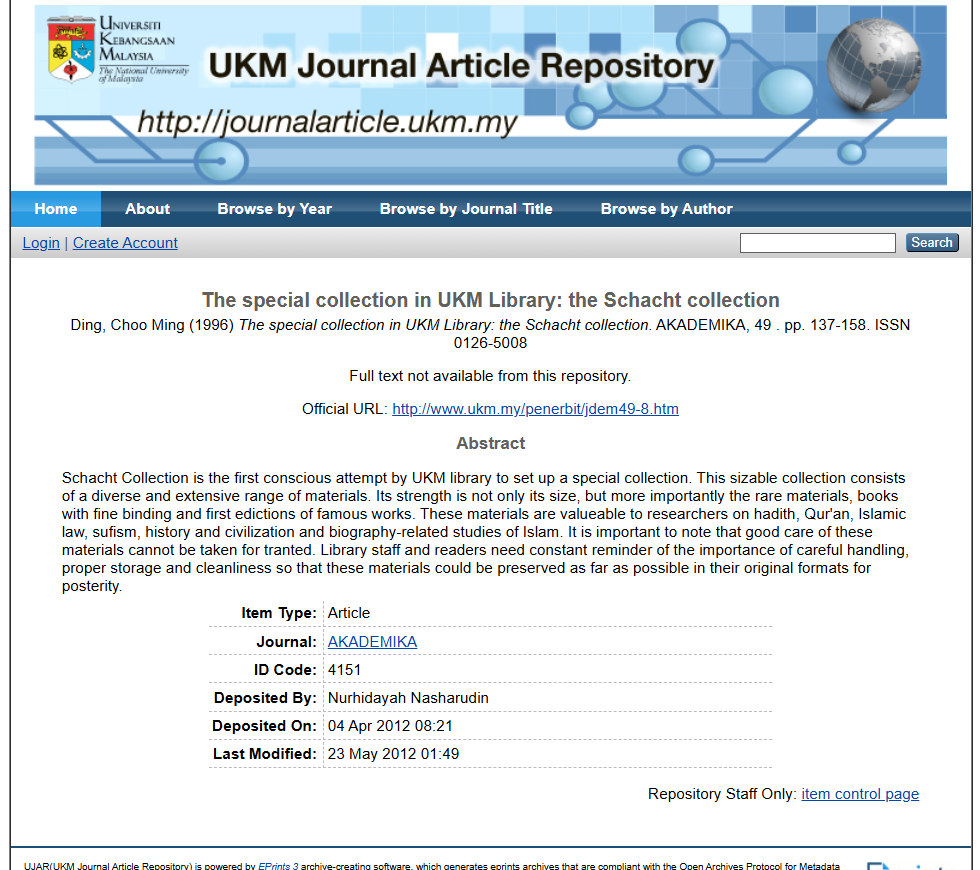
Schacht Collection is the first conscious attempt by the UKM library to set up a special collection. This sizable collection consists of a diverse and extensive range of materials. Its strength is not only its size, but more importantly the rare materials, books with fine binding and first editions of famous works. These materials are valuable to researchers on hadith, Qur’an, Islamic law, Sufism, history and civilization and biography-related studies of Islam. It is important to note that good care of these materials cannot be taken for granted. Library staff and readers need constant reminders of the importance of careful handling, proper storage and cleanliness so that these materials could be preserved as far as possible in their original formats for posterity.
Source : https://journalarticle.ukm.my/4151/
Source: https://ptsldigital.ukm.my/jspui/handle/123456789/388891
vi. The Earliest Manuscripts of the Malay World
The earliest manuscripts of the Malay world refer to written texts or documents produced during the early development of Malay civilization. These manuscripts were typically written in Jawi script or other ancient scripts, such as Pallava and Kawi, which originated from Indian cultural influences before evolving into local writing forms. These manuscripts play a crucial role in the history, literature, religion, law, and culture of Malay and broader Southeast Asian societies. The earliest Malay manuscripts are now preserved in Muzium Warisan Akademik UKM. This effort is essential to ensure that this heritage endures and remains accessible to future generations.

vii. An Illustrated Herbal Catalogue From The Tibb Manuscript
This project was carried out by the Malay World Manuscript Research Centre (PPMAM), ATMA, Universiti Kebangsaan Malaysia (UKM)The purpose of producing the illustrated catalogue of the Malay Tibb Manuscript is to introduce the various species of herbal plants from the Malay world that have been used by the Malay community as remedies for different ailments. This initiative aims to preserve traditional Malay medical knowledge by documenting and illustrating herbal plants according to the names recorded in the Tibb manuscript.


viii. Quranic Manuscript Decorative Art Coloring Contest
Held on April 12, 2025, the “Quranic Manuscript Decorative Art Coloring Contest” was a paid educational outreach event, with an entry fee of RM20.00, organized by the Malay World Manuscript Research Centre (Pusat Penyelidikan Manuskrip Alam Melayu – PPMAM) at the Islamic Arts Museum Malaysia. Executed in collaboration with the National Library of Malaysia (Perpustakaan Negara Malaysia), the creative initiative successfully engaged between 50 and 100 participants, drawing inclusive participation from Muslim, Chinese, Indian, and Indigenous students. By immersing the younger generation in the intricate geometric patterns and floral motifs of historical Malay manuscripts, the program generated a profound societal impact by fostering cultural unity, deeply instilling an appreciation for traditional regional arts, and playing a crucial role in revitalizing and preserving the rich, shared cultural heritage of the Malay Archipelago for sustainable future communities.
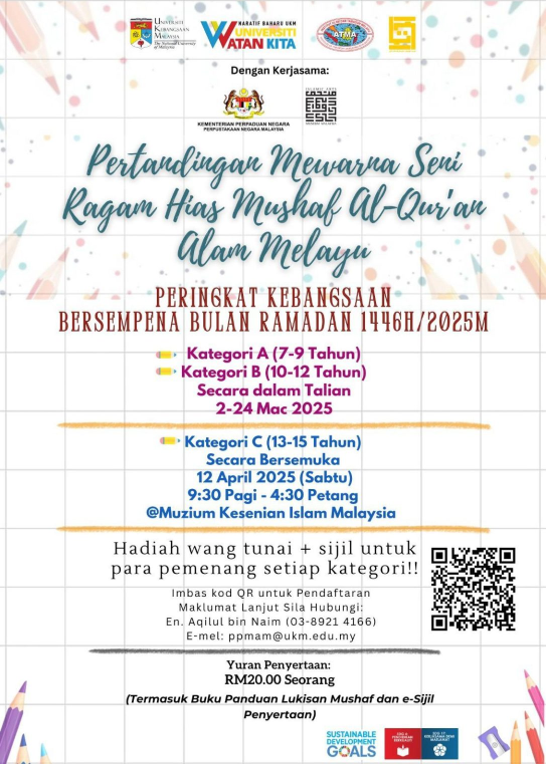
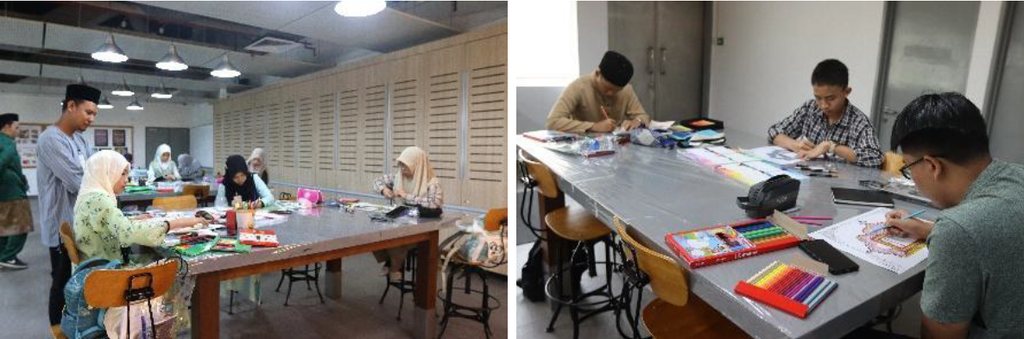
creative and educational activities.
ix. Gempita @ Istana Puteri Bongsu
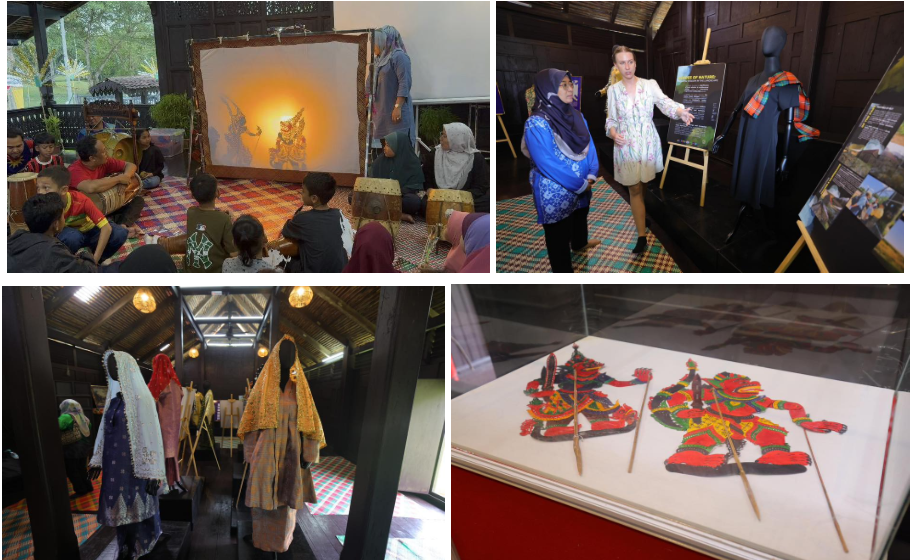
Spanning from September 18 to 20, 2025, “Gempita @ Istana Puteri Bongsu” was a fully grant-funded, free cultural and academic showcase organized by ATMA UKM. Designed to revitalize Malay cultural heritage, the three-day event engaged approximately 300 participants in strategic collaboration with prominent agencies including the Department of Museums Malaysia (Jabatan Muzium Malaysia), the British Council, WCO Holding Sdn. Bhd., Universiti Teknologi Malaysia (UTM), the Kajang Municipal Council (Majlis Perbandaran Kajang), Metro Kuala Lumpur Polytechnic (Politeknik Metro Kuala Lumpur), and the (Kelab Rakan Taman UKM). The program delivered a highly significant community impact by transforming Istana Puteri Bongsu into a dynamic, living heritage space that effectively bridged academia and local communities. By promoting cultural sustainability within an urban university context and prioritizing intergenerational knowledge transmission, the initiative directly advanced SDG 11’s goal of safeguarding tangible and intangible cultural heritage for resilient and inclusive communities.
x. Islamic Art Exhibition – FUNDUQ 2025 (Selangor Islamic Heritage Festival 2025)
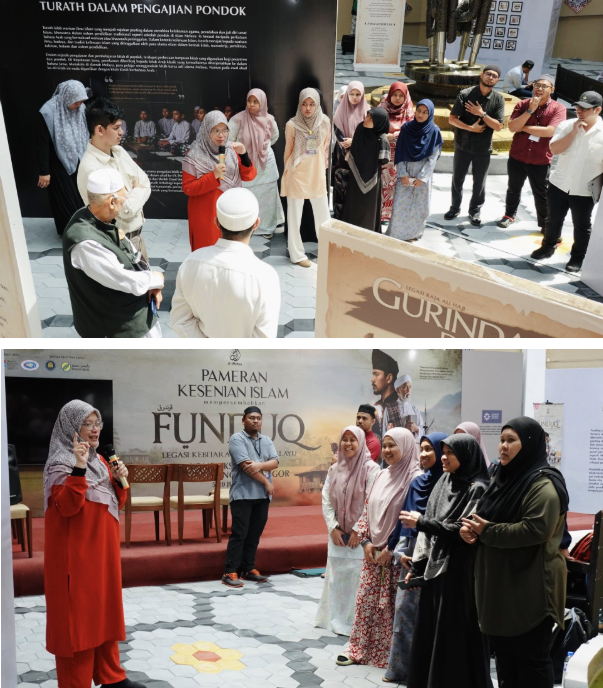
Conducted from July 5 to 20, 2025, at the Selangor International Islamic Arts Complex, the “Islamic Art Exhibition – FUNDUQ” was a free cultural heritage showcase held in conjunction with the Selangor Islamic Heritage Festival. Organized in collaboration with the Darul Ehsan Book Initiative (Inisiatif Buku Darul Ehsan – IBDE), the Restu Foundation (Yayasan Restu), and the Selangor International Islamic Art Complex, the exhibition successfully engaged between 500 and 1,000 public attendees. Highlighting the enduring legacy of traditional Islamic boarding schools (pondok and pesantren) across the Nusantara region, the event displayed over 10 rare, handwritten classical Islamic (turath) manuscripts dating back over a century. This initiative created a profound societal impact by bridging past and present generations, raising critical public awareness regarding the conservation of historical manuscripts, and inspiring a renewed appreciation for traditional scholarship that strengthens cultural identity and regional connections in modern cities.
xi. Cultural Carnival: Civilizing Cyberjaya
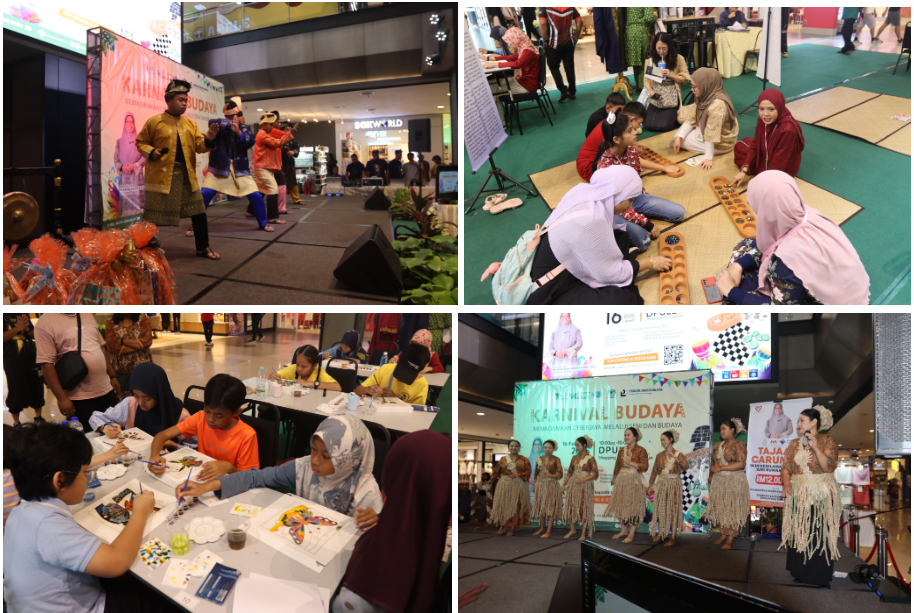
Held on February 16, 2025, at the DPULZE Shopping Center, the Cultural Carnival: Civilizing Cyberjaya was a free, grant-funded community engagement initiative orchestrated by ATMA. Executed in partnership with the Sepang Parliamentary Office (Pejabat Parlimen Sepang) and the Malaysian Linguistics Association (Persatuan Linguistik Malaysia), the program successfully gathered 200 participants for an immersive day of cultural exhibitions, traditional performances, and heritage activities. By strategically hosting the event in a prominent commercial venue, the initiative delivered a powerful social impact by expanding cultural outreach beyond academic circles and bringing Malay heritage directly to the urban public. This inclusive approach directly advanced SDG 11 by elevating the visibility of local cultural diversity, fostering multi-sectoral cooperation, and significantly strengthening cultural identity and social cohesion within a rapidly developing urban setting.
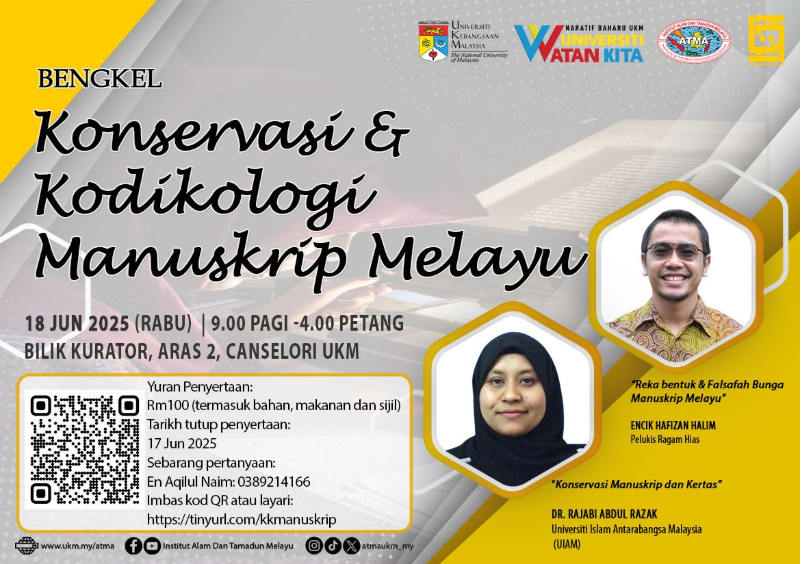
xii. Malay Manuscript Codicology Conservation Workshop
Universiti Kebangsaan Malaysia (UKM), through its Institut Alam dan Tamadun Melayu (ATMA), actively undertakes initiatives to document, conserve and preserve Malaysia’s cultural heritage, including heritage embodied in Malay manuscripts.
One example is the Bengkel Konservasi Kodikologi Manuskrip Melayu (Malay Manuscript Codicology Conservation Workshop) organised by ATMA, UKM. The workshop focuses on the conservation and codicological study of Malay manuscripts, contributing to the systematic preservation of valuable documentary heritage and the knowledge contained within these historical materials.
Malay manuscripts are significant not only as physical historical documents but also as important repositories of intangible cultural heritage. They preserve and transmit the Malay language, traditional knowledge, intellectual traditions, religious and philosophical thought, historical narratives, customs, values and cultural practices from one generation to another. Therefore, conserving and documenting these manuscripts helps safeguard the cultural knowledge and linguistic heritage embedded within them for future generations.
Through ATMA’s work, UKM contributes to the recording, documentation, conservation, research and transmission of Malay cultural knowledge. Such efforts are particularly important for preserving historical forms of language and knowledge that may otherwise be lost, including knowledge associated with local communities and their historical cultural traditions.
This initiative is also consistent with UKM’s broader institutional commitment to cultural heritage preservation. Through ATMA and its related collections and research activities, UKM provides an institutional platform for the study, documentation and safeguarding of the Malay world’s cultural, linguistic and intellectual heritage.
Overall, the conservation of Malay manuscripts demonstrates that UKM, as a university body, does not merely conduct academic research on cultural heritage but actively undertakes institutional projects and capacity-building activities to safeguard, document and transmit cultural knowledge and traditions. These efforts contribute to ensuring that Malaysia’s rich intangible cultural heritage, particularly Malay language, knowledge systems, intellectual traditions and cultural memory, remains accessible and relevant to future generations.
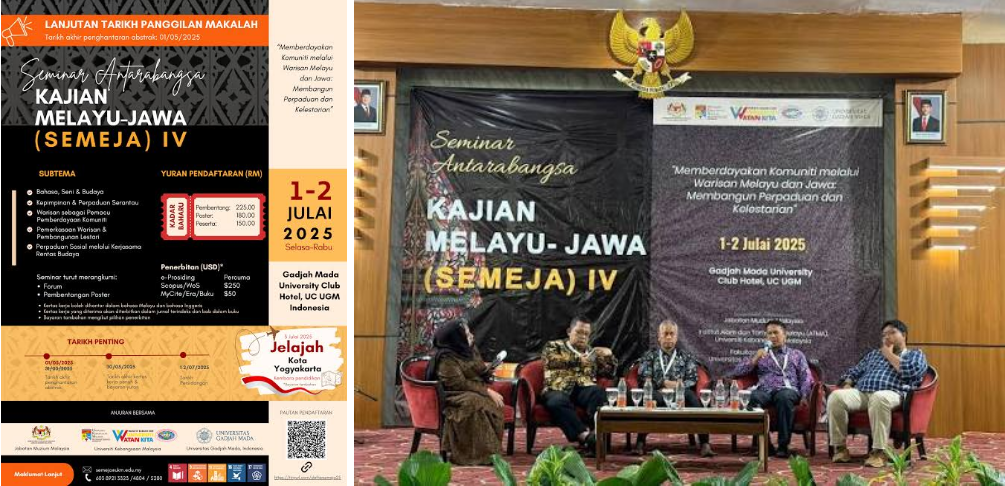
xiii. International Seminar on Malay-Javanese Studies (SEMEJA IV) 2025
UKM also contributes to the documentation, preservation and transmission of cultural heritage associated with Malay-Javanese communities through the activities of the Institute of the Malay World and Civilization (ATMA). One example is the International Seminar on Malay-Javanese Studies (SEMEJA IV) 2025, organised by ATMA, UKM in collaboration with the Department of Museums Malaysia and Universitas Gadjah Mada.
The seminar provides an institutional platform for the study and exchange of knowledge on Malay-Javanese history, culture and heritage, with themes covering language, arts and culture, heritage as a driver of community empowerment, heritage enhancement and sustainable development, and social cohesion through cross-cultural collaboration.
Such initiatives contribute to safeguarding cultural knowledge and identity associated with Malay-Javanese communities, including cultural traditions and heritage that have been transmitted across geographical boundaries and generations. In this context, UKM’s work through ATMA supports the documentation, scholarly preservation and transmission of cultural heritage associated with communities whose historical movements and settlement have contributed to the wider Malay world.
While SEMEJA IV is not explicitly described as a project specifically for displaced communities, it provides relevant supporting evidence of UKM’s institutional role in preserving and transmitting the cultural heritage, language, traditions and knowledge of Malay-Javanese communities across geographical and cultural boundaries.
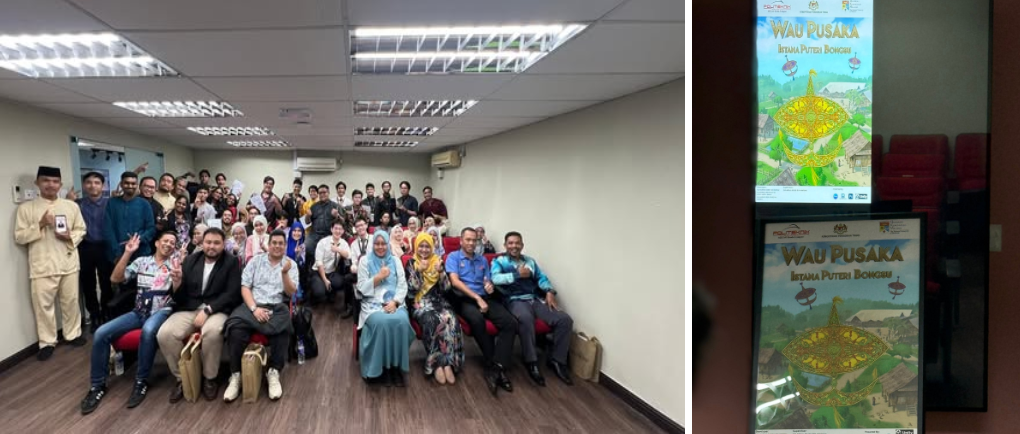
xiv. Bentara Digital: Gamification of Cultural Heritage
Another project demonstrating UKM’s active contribution to the preservation and transmission of intangible cultural heritage is Bentara Digital: Gamifikasi Warisan Budaya (Digital Herald: Cultural Heritage Gamification), an initiative developed through the Bentara Istana Programme at Istana Puteri Bongsu.
The initiative provides a platform for learning, research and innovation related to Malay cultural heritage, while creating opportunities for collaboration between UKM, educational institutions, students and the wider community. As part of the ATMA–Politeknik Metro Kuala Lumpur (PMKL) collaboration, the Bentara Digital initiative focuses on the use of digital technology and gamification to promote, interpret and transmit Malay cultural heritage to younger generations.
The initiative was further implemented through a Pro-I Competition involving 12 final-year student project groups from the Department of Information and Communication Technology, PMKL, held on 20 November 2025. Representatives from ATMA and UKM served as joint advisers to the projects, providing academic and heritage expertise in the development of the digital gamification initiatives.
The project contributes to intangible cultural heritage preservation by transforming cultural knowledge and heritage narratives into interactive and engaging digital learning experiences. This approach supports the transmission of cultural knowledge to younger generations and helps sustain awareness of Malay cultural identity and traditions in the context of a rapidly evolving digital environment.
The establishment of Istana Puteri Bongsu as the UKM Digital Heritage Hub further demonstrates UKM’s institutional commitment to connecting heritage, community, education and technology. Through initiatives such as Bentara Digital, UKM actively facilitates innovative approaches to the interpretation, preservation and intergenerational transmission of cultural heritage.
Therefore, this project provides clear evidence that UKM, through ATMA, actively delivers initiatives that contribute to the preservation, interpretation, transmission and revitalisation of intangible cultural heritage, particularly by using digital innovation to engage younger generations with Malay cultural heritage.
2. Local Cultural Heritage
i. First Student Magazine: SEMESTA
The first student magazine at Universiti Kebangsaan Malaysia (UKM) was SEMESTA, published in 1971 by the First Residential College at UKM. The initial editorial team was led by Chamhuri Siwar. SEMESTA served as a platform for students to voice their opinions, share ideas, and showcase their creative works. It also acted as a medium for disseminating information about campus activities, current issues, and academic developments at UKM. This publication reflects the intellectual and cultural spirit of students during that era and has become an important part of the history of campus publications in Malaysia.

ii. Tun Ahmad Sarji Collection
This distinguished collection was generously donated by The Most Honorable Tun Ahmad Sarji Abdul Hamid, Pro-Chancellor of Universiti Kebangsaan Malaysia (UKM) and former Chief Secretary to the Government of Malaysia. It comprises an exceptional range of materials covering subjects such as civil service, corporate administration, art and heritage, religion, humanities, and sports reflecting the breadth of his intellectual pursuits and contributions to national development. The Tun Ahmad Sarji Collection stands as a valuable repository of knowledge and leadership insight, accessible for reference only at the Anjung Pro-Canselor Tun Ahmad Sarji, Level 4, Tun Sri Lanang Library, UKM.

3. Heritage of Displaced Communities
i. The Lithograph, Caricature and Manuscript Gallery, FSSK
The Lithograph, Caricature, and Manuscript Gallery, at Universiti Kebangsaan Malaysia (UKM) is a unique gallery within the Faculty of Social Sciences and Humanities (FSSK), showcasing an exceptional collection of lithographs, caricatures, and manuscripts. These items, which are not cataloged by other research institutions, provide invaluable insights into Malaysian heritage and history. The lithographs include works by colonial artists invited by the Portuguese, British, and French governments, depicting significant cultural events, society, and the unique flora and fauna of Peninsular Malaysia. The caricatures, drawn by local artists and originally published in newspapers and magazines, reflect political, economic, and social themes from the 1930s through the Malaya era and up to the formation of Malaysia. The manuscript collection includes Malay and Bugis texts, featuring an 18th-century diary from the Sultan of Bone, which documents the daily lives of the Bugis community and their trade relationships with regions like southern Johor and Sulawesi. The gallery is located on the 4th floor of Block A in the Faculty of Social Sciences and Humanities at UKM’s Bangi campus in Selangor, Malaysia.

ii. The Segamat Dialect
The Segamat dialect is a unique variant of the Malay language spoken in the Segamat district of Johor. This dialect has distinctive features that set it apart from standard Malay and other dialects in Malaysia. In terms of phonology, the Segamat dialect shows variations in vowel and consonant pronunciation compared to standard Malay. For example, the vowel ‘a’ at the end of words often changes to ‘o,’ as in “saya” becoming “sayo.” Lexically, it includes unique vocabulary not found in other dialects, such as the word “ghok,” which means “to sleep.” Morphologically, the dialect has distinct prefixes and suffixes; for instance, the prefix ‘me-‘ in standard Malay may be replaced with ‘nge-,’ as in “membaca” becoming “ngebaco.” Syntactically, variations in word order and sentence structure give the dialect its unique identity.
The Segamat dialect has special cultural significance. It reflects the cultural identity of the Segamat community and serves as a symbol of local pride. As part of Malaysia’s linguistic heritage, it contributes to the country’s linguistic diversity and is important for preservation and study. The dialect is also influenced by Segamat’s geographical proximity to Negeri Sembilan and Melaka, which has led to a unique blend of linguistic elements from these regions. For further information on the Segamat dialect and its distinctive features, refer to an article by Ungku Mohd Zaman Tahir in the book “Segamat: Sejarah & Mitosnya (Bahagian 2),” published in 2001. A copy of this article is available at the Library of the Institute of the Malay World and Civilization (ATMA) at Universiti Kebangsaan Malaysia, with the call number 7845.
Sources: https://malaycivilization.com.my/omeka/items/show/215102
UKM plays a leading role in recording, documenting, and preserving Malaysia’s rich cultural heritage through research, exhibitions and digital innovation. Initiatives such as the Malay Civilization Portal, Schacht Collection, and Malay Manuscript Discussion Series ensure that historical knowledge, traditional arts, and linguistic diversity are systematically preserved and made accessible to scholars and the public. Projects like the Illustrated Herbal Catalogue from the Tibb Manuscript, Qur’anic Manuscript Decorative Art Coloring Contest, and Al-Wahyu Exhibition further highlight UKM’s dedication to safeguarding Islamic and Malay cultural legacies. By also preserving local dialects, early student publications, and visual archives such as the Lithograph, Caricature, and Manuscript Gallery, UKM demonstrates a holistic approach to heritage conservation. These efforts not only sustain Malaysia’s intellectual and cultural identity but also foster public appreciation and research engagement for future generations.
iii. Javanese Diaspora in Malaysia: Cultural and Language Perspectives
Universiti Kebangsaan Malaysia (UKM), through its academic and research activities, contributes to the documentation, preservation and understanding of intangible cultural heritage, including the heritage of diaspora and displaced communities.
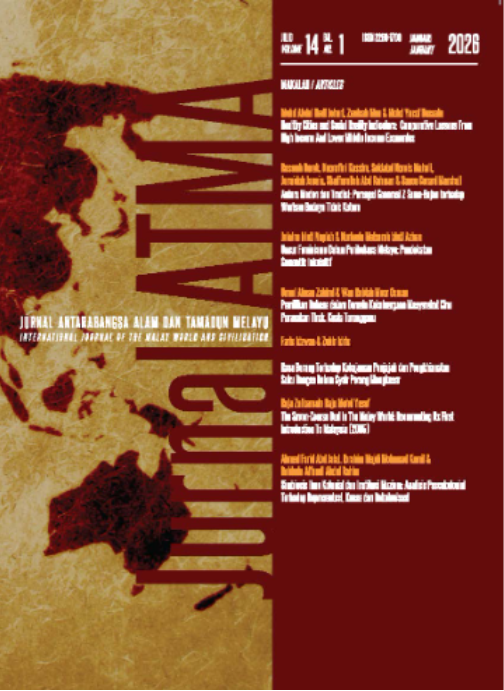
A relevant example is the scholarly work published in the International Journal of the Malay World and Civilisation (JATMA), a journal published by UKM, entitled “Diaspora Jawa di Malaysia: Perspektif Budaya dan Bahasa” [Javanese Diaspora in Malaysia: Cultural and Language Perspectives] by Hendrokumoro (2023). The study documents the cultural and linguistic heritage of the Javanese diaspora community in Malaysia, examining the continuity and transformation of Javanese identity across generations.
The study records important elements of intangible heritage, including the use and transmission of the Javanese language, cultural practices, traditions, community identity and the practice of kenduri, while also examining the processes of acculturation between Javanese and local Malay cultures. By documenting these cultural and linguistic practices, the research contributes to preserving knowledge about the heritage and identity of a diaspora community whose cultural traditions have evolved within the Malaysian context.
This initiative demonstrates UKM’s institutional contribution to recording, documenting and safeguarding intangible cultural heritage, particularly the heritage of communities with migration and diaspora histories. It also illustrates how UKM uses scholarly research and academic publication to ensure that cultural knowledge, language and traditions are recorded and made available for future generations.
Evidence: Hendrokumoro. (2023). Diaspora Jawa di Malaysia: Perspektif Budaya dan Bahasa. International Journal of the Malay World and Civilisation (JATMA), 11(1), 11–18. DOI: 10.17576/jatma-2023-1101-02.
%20Perspektif%20Budaya%20dan%20Bahasa%20—.pdf
Collectively, the evidence demonstrates that UKM actively safeguards the knowledge, languages, traditions and cultural expressions that give communities their identity. Its projects produce lasting resources, including digital databases, manuscript records, illustrated catalogues and scholarly publications, while conservation training, community programmes and interactive learning support their continued interpretation and transmission. By connecting documented heritage with contemporary learning and community participation, UKM helps ensure that cultural knowledge remains accessible, understood and passed on to future generations, contributing to cultural continuity and the safeguarding of heritage under SDG 11.