

Make cities and human settlements inclusive, safe, resilient and sustainable
SDG 11 Indicator
11.4 – Sustainable practices
11.4.8 – Planning Development – New Build Standards
Universiti Kebangsaan Malaysia (UKM) demonstrates its commitment to sustainable infrastructure development by incorporating green building principles into construction, renovation and campus upgrading projects. Guided by the UKM Sustainability Strategic Plan 2030 and Malaysia’s Government Green Procurement Guidelines (GGP) 3.0, UKM promotes energy efficiency, water conservation, natural ventilation, sustainable materials and environmentally responsible building design. A key achievement is the Provisional Green Building Index (GBI) Design Assessment Certification awarded to Hospital TABTAR UKM, demonstrating compliance with a nationally recognised green building certification framework at the design stage. These practices are further reflected in campus facilities such as Akademia Siber Teknopolis (AST) and ongoing infrastructure upgrading initiatives. Collectively, these efforts reinforce UKM’s commitment to sustainable campus development and SDG 11: Sustainable Cities and Communities.
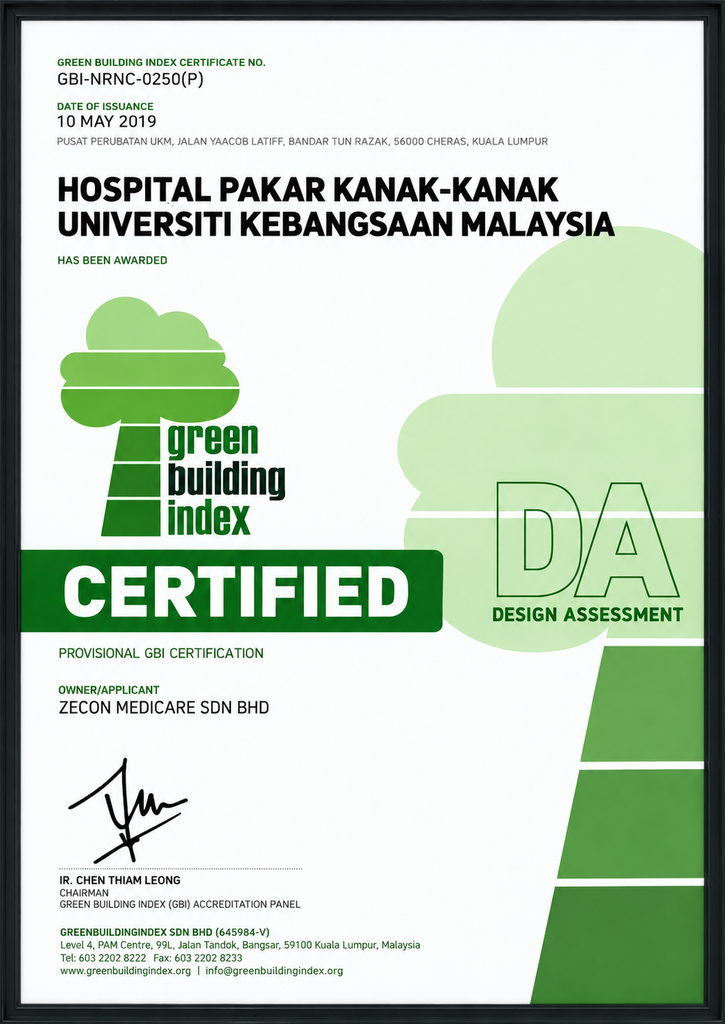
1. UKM’s Commitment to Sustainable Building Standards: Green Building Index (GBI) Certification for Hospital Tunku Ampuan Besar Tuanku Aishah Rohani (Hospital TABTAR)
Universiti Kebangsaan Malaysia (UKM) demonstrates its commitment to sustainable infrastructure development by adopting nationally recognised green building standards in its construction projects. A notable example is Hospital Tunku Ampuan Besar Tuanku Aishah Rohani (Hospital TABTAR), formerly Hospital Pakar Kanak-Kanak UKM, which was awarded Provisional Green Building Index (GBI) Certification under the Design Assessment (DA) category since May 2019. The certification was issued under Malaysia’s Green Building Index (GBI), a nationally recognised green building assessment and certification framework that promotes environmentally responsible building design and construction. This achievement demonstrates UKM’s commitment to incorporating sustainable design principles into its healthcare infrastructure and supports SDG 11: Sustainable Cities and Communities and SDG 13: Climate Action.
2. UKM Sustainability Strategic Plan 2030 – Sustainable Campus
The UKM Sustainability Strategic Plan 2030, particularly Sustainability Pillar 4: Sustainable Campus, provides the strategic foundation for incorporating sustainability into the University’s physical infrastructure and campus development.
Of particular relevance are Objective 4: Developing Affordable Energy, which includes upgrading facilities with energy-saving equipment; Objective 5: Efficient Energy Management; and Objective 6: Integrating Sustainability in Physical Development. Together, these objectives guide UKM in improving the environmental performance of its campus infrastructure through energy efficiency, effective resource management and the integration of sustainability considerations into physical development.
Through this strategic framework, sustainable development is embedded within UKM’s long-term approach to campus planning, infrastructure improvement and building development.
Source: https://www.ukm.my/kelestarian/data/publications/UKM-SUSTAINABILITY-STRATEGIC-PLAN-2030.pdf
3. Green Building Requirements for Construction and Renovation
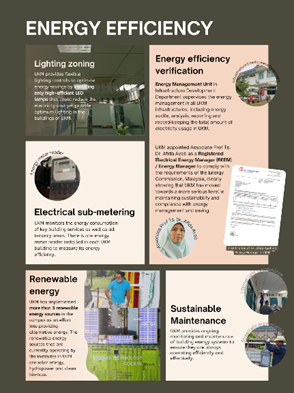
UKM incorporates green-building principles into its construction and renovation requirements as part of its institutional approach to sustainable campus development. Sustainable building elements applied by the University include natural daylighting, natural ventilation, rainwater harvesting systems, high-efficiency LED lighting, sustainable landscaping and recycling facilities.
These green-building criteria are incorporated into UKM’s construction and renovation tender requirements, providing an institutional mechanism for integrating sustainability considerations into building and infrastructure projects. The Infrastructure Development Department (JPP) oversees construction and building upgrading works and plays an important role in ensuring that relevant building requirements are incorporated into campus infrastructure development.
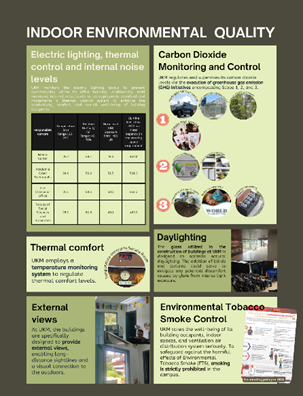
UKM’s sustainable building approach focuses particularly on energy efficiency, indoor environmental quality, responsible use of materials and resources, water conservation and resource-efficient building operation, supporting the development of a more environmentally responsible campus.
Elements of Green Building Implementation as Reflected in All Construction and Renovation
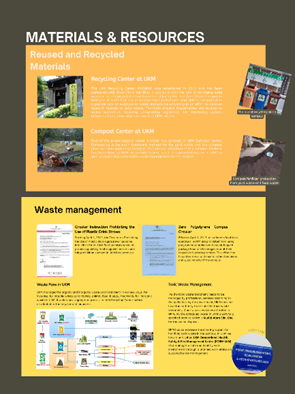
Buildings in UKM adhere to green building standards for renovations and construction, and have implemented elements such as full natural daylighting, natural ventilation, rainwater harvesting system, installation of high efficiency LEDs, landscaping and recycling. These criterias have been listed in the construction and renovation tender in UKM. UKM also installed solar panels as an effort to reduce electricity’s cost. UKM also has one energy manager to oversee the energy management in UKM.
UKM implements more than 3 elements of green buildings in the construction and renovations of its buildings. At UKM, the party responsible for ensuring that construction and building upgrade works meet green building criteria is placed under the Infrastructure Development Department (https://www.ukm.my/jpp/). Among the green building elements that UKM adheres to are energy efficiency, indoor environmental quality, and materials and resources.
4. Water-Conscious Building Standards
UKM further strengthens its sustainable building practices through its Water-Conscious Building Standards, which are aligned with Malaysia’s Government Green Procurement Guidelines (GGP) 3.0 and the UKM Sustainability Strategic Plan 2030.
Under these standards, UKM promotes the use of water-efficient fixtures, low-flow toilets, water-saving taps, rainwater harvesting systems and water-efficient landscaping. Rainwater harvesting is encouraged for non-potable applications, while native and drought-resistant plant species are used to reduce irrigation requirements.
This alignment with national green procurement guidance provides an additional framework for integrating environmental considerations into UKM’s building-related procurement and infrastructure practices.
Source: https://www.ukm.my/kelestarian/sustainability-policies/water-conscious-building-standards/
5. Implementation of Sustainable Building Features
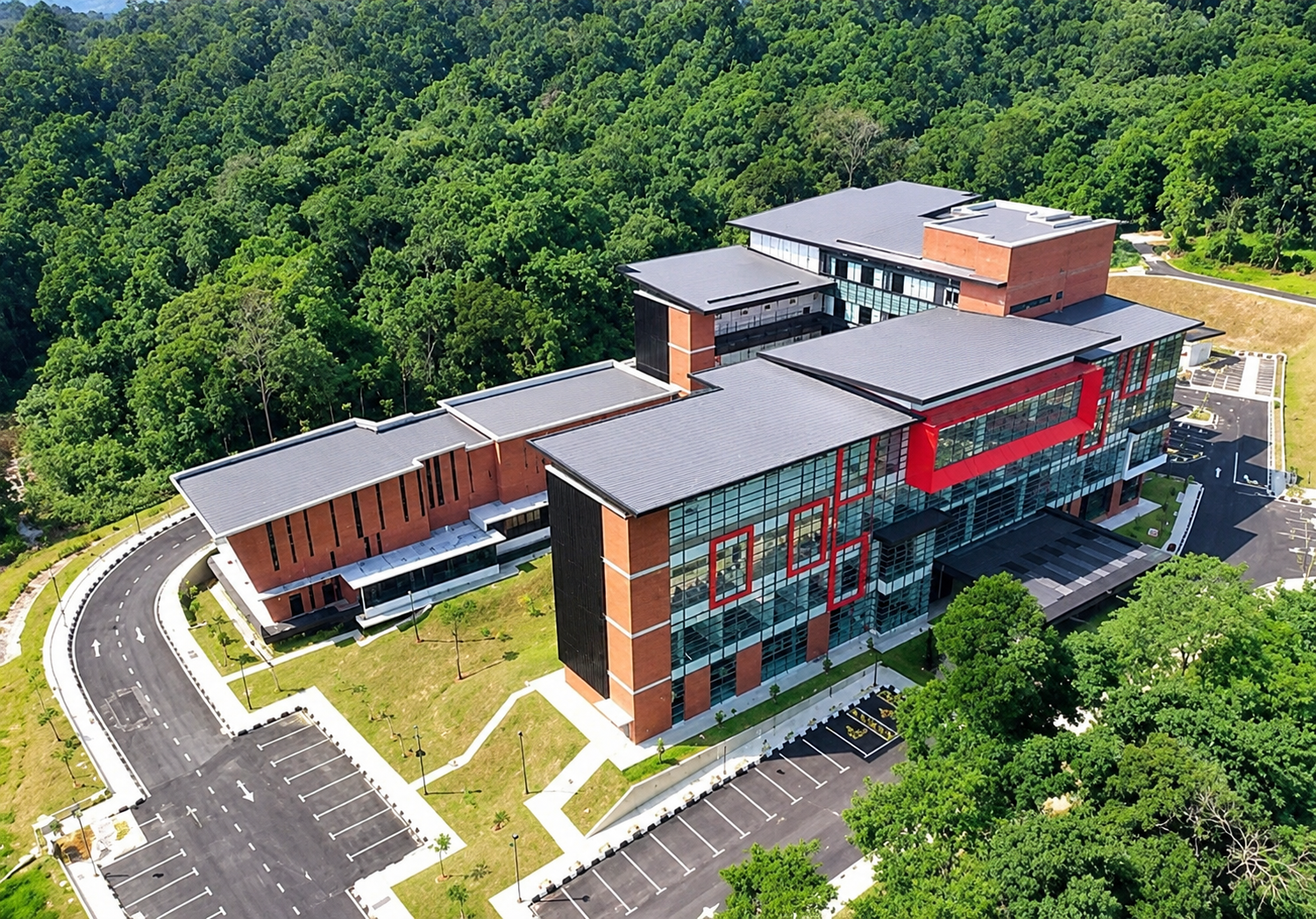
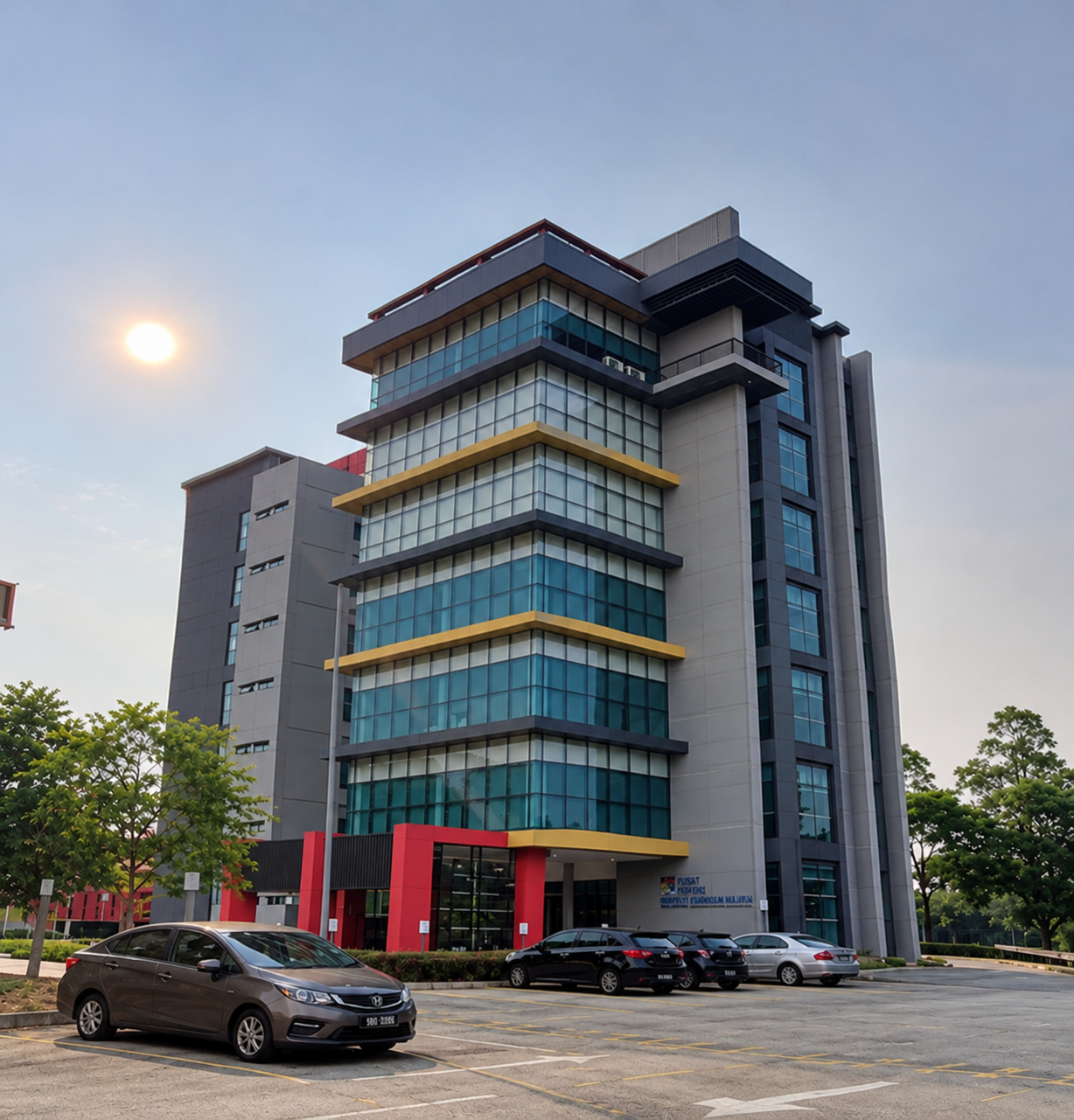
The practical implementation of UKM’s sustainable building approach can be demonstrated through campus buildings such as Akademia Siber Teknopolis (AST) and the STEM, Media and Language Research Laboratory.
Both buildings incorporate architectural features that maximise natural daylight, particularly through extensive glass-based building design. Increased use of natural daylight reduces dependence on artificial lighting during daytime operation and contributes to improved energy efficiency.
At AST, this passive design approach is complemented by high-efficiency LED lighting and smart-building technologies that support more efficient building operation. These features demonstrate how UKM translates its institutional sustainability principles into practical building design and operational measures.
6. 2025 Upgrading of Existing Building Infrastructure
In 2025, UKM continued to improve its existing building stock through systematic renovation and infrastructure upgrading. On 3 February 2025, the UKM Student Housing Centre conducted a planning workshop for the upgrading of 14 ageing student accommodation blocks into Executive Residential Blocks within the University’s residential college system.
The planning process involved residential college management together with technical expertise from UKM’s Infrastructure Development Department (JPP), including its civil, mechanical, electrical and quantity surveying functions. This multidisciplinary approach provides an institutional mechanism for coordinating improvements to existing university buildings and infrastructure.
The upgrading of existing building stock complements UKM’s sustainable construction and renovation approach by extending building service life, improving functionality and enabling existing infrastructure to be progressively enhanced in accordance with the University’s evolving building and sustainability requirements.
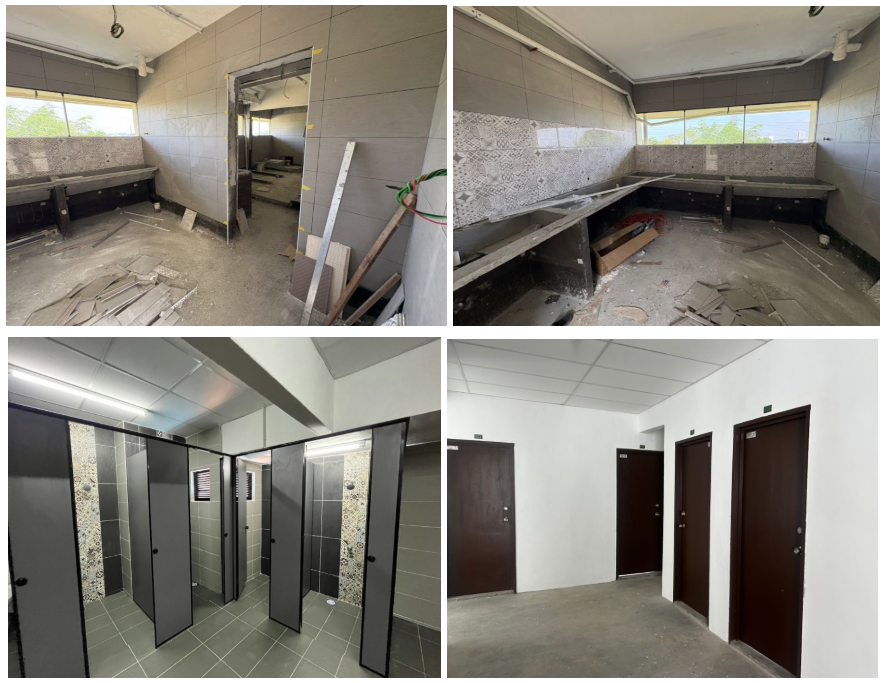
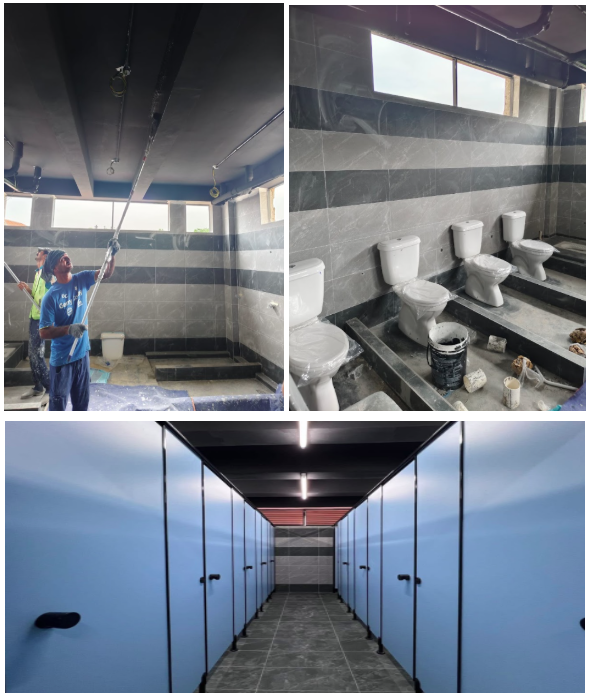
UKM – Upgrading of 14 Residential Blocks, 2025
UKM’s approach connects sustainable campus planning with construction requirements and practical building design. Hospital TABTAR’s provisional GBI Design Assessment provides a documented example of applying a recognised green-building framework, while energy- and water-conscious requirements support broader improvements in campus development. By translating these commitments into project specifications, technical oversight and verified assessment records, UKM strengthens accountability for the environmental performance of its buildings and supports more resource-efficient, sustainable infrastructure.