UKM’s Net Zero Emission Target 2040
Carbon Footprint Assessment Tool
Carbon report is the process of calculating and disclosing the greenhouse gas (GHG) emissions of an organization. It involves carbon accounting (measuring the emissions resulting from an organization’s operations and supply chains) and then reporting the results of the carbon accounting process. UKM designed a process flowchart to calculate GHG emissions (Figure 1). This program applies to the methodology prescribed by the GHG Standard Protocol for reporting greenhouse gas emission rates (Figure 2). The adopted methodology facilitates the calculation of Scope 1, 2 and 3 emissions as delineated by the GHG Protocol, providing a comprehensive assessment of UKM’s on-campus GHG footprint.


reporting carbon emission in UKM
Carbon Emission Report
UKM produces a yearly carbon report which adheres to the GHG standard that covers Scope 1, Scope 2 and Scope 3 emission. By producing this annual reporting UKM committed to this carbon footprint program and gave full contribution on tracing carbon emission especially in Scope 1 and Scope 2 sources.
Scope 1
Calculating Scope 1 emissions, which include direct emissions from university-owned or controlled sources such as vehicles, required significant effort. UKM conducted a survey to collect information on vehicle mileage, commuting distances, and fuel consumption among university members. This data, along with the total number of registered vehicles provided by the UKM Security Division and traffic monitoring within the campus, enabled the estimation of UKM’s average fuel consumption. Using this information, the university was able to determine the total emissions generated by its vehicles.
Formula for Scope 1 calculation can be found in below:
Emissions (kgCO2e) = Quantity of Fuel Consumed (L or kg) × Emission Factor (kg CO2e per L or kg)
The emission factor used for calculating fuel combustion for both diesel and petrol are sourced from IPCC as follows:
- Diesel: 2.70533 kgCO2e/litre
- Petrol: 2.33969 kgCO2e/litre
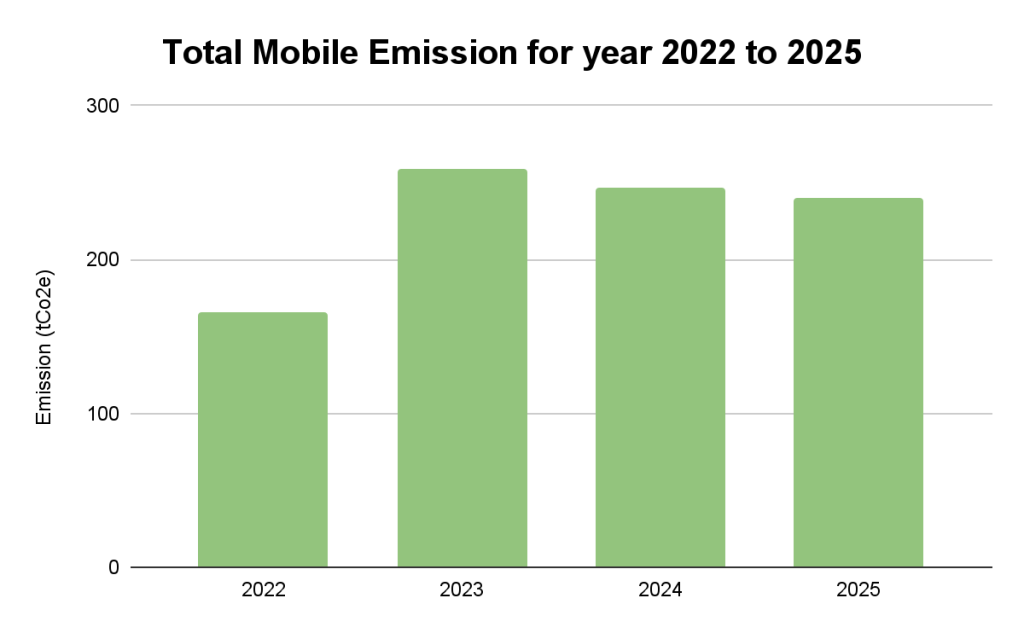
Based on the calculations, total emissions for Scope 1 in 2022 were 165.603 tCO2e. Calculations show 258.863 tCO2e for the year 2023. Besides, total emissions for Scope 1 in 2024 were 246.897 tCO2e and total emissions for Scope 1 in 2025 were 239.567 tCO2e . Detail on data breakdown for Scope 1 for year 2022 to 2025 is shown in Table 1.
Table 1: Total mobile emission (tCO2eq) for year 2022 to 2025| Types of vehicle | Total emission (tCO2eq) | |||
| 2022 | 2023 | 2024 | 2025 | |
| Car | 126.38 | 119.49 | 100.63 | 123.22 |
| Motorcycle | 31.69 | 21.79 | 28.68 | 29.24 |
| Bus | 7.53 | 117.59 | 117.59 | 87.11 |
| TOTAL | 165.60 | 258.87 | 246.90 | 239.57 |
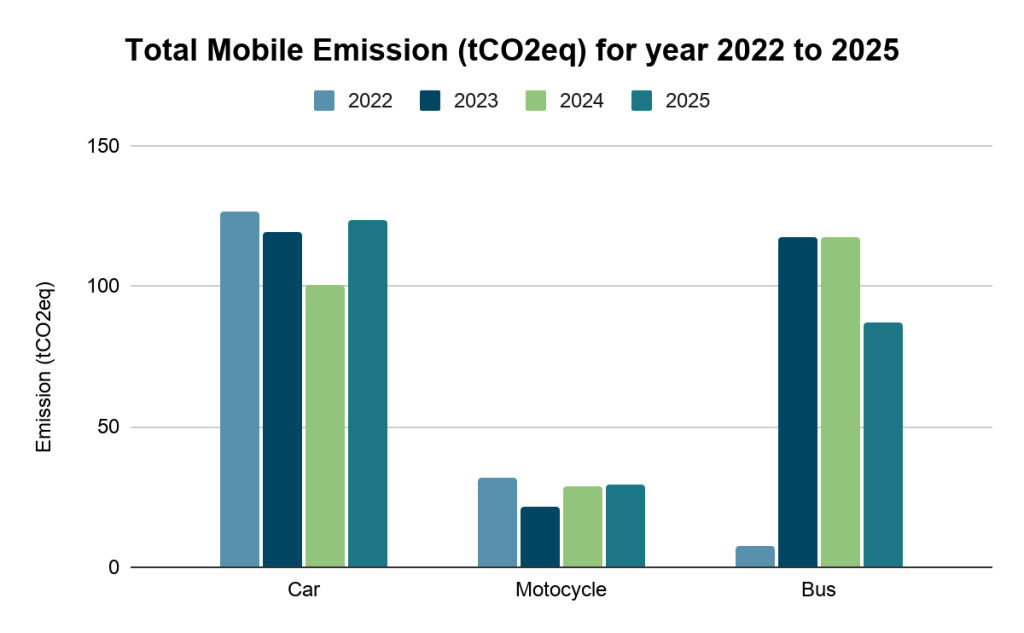
Table 2: Summary of the total mobile emission (tCO2eq) for year 2022 to 2025
| Year | (Baseline)2022 | 2023 | 2024 | 2025 |
| Total emission (tCO2eq) | 165.60 | 258.87 | 246.90 | 239.57 |
Scope 2
Scope 2 emissions originate from the indirect greenhouse gases released during the generation of electricity purchased from external sources. This category encompasses emissions associated with the consumption of purchased electricity, heat, steam or cooling. At UKM, data on electricity consumption are mainly collected from utility bills provided by the energy supplier, Tenaga Nasional Berhad (TNB). The Energy Management Department under the Infrastructure Development Department (Prasarana UKM) centrally manages these bills which details monthly electricity use. This data on energy consumption is vital for precise Scope 2 emission calculations.
Formula for Scope 2 calculation can be found in below:
Emissions (kg CO2e) = Total kWh Consumed × Emission Factor (kg CO2e per kWh)
The emission factor used for calculating energy emissions are sourced from IPCC as follows:
- Electricity grid: 0.4362 kgCO2e/kWh
- District cooling: 0.3926 kgCO2e/kWh
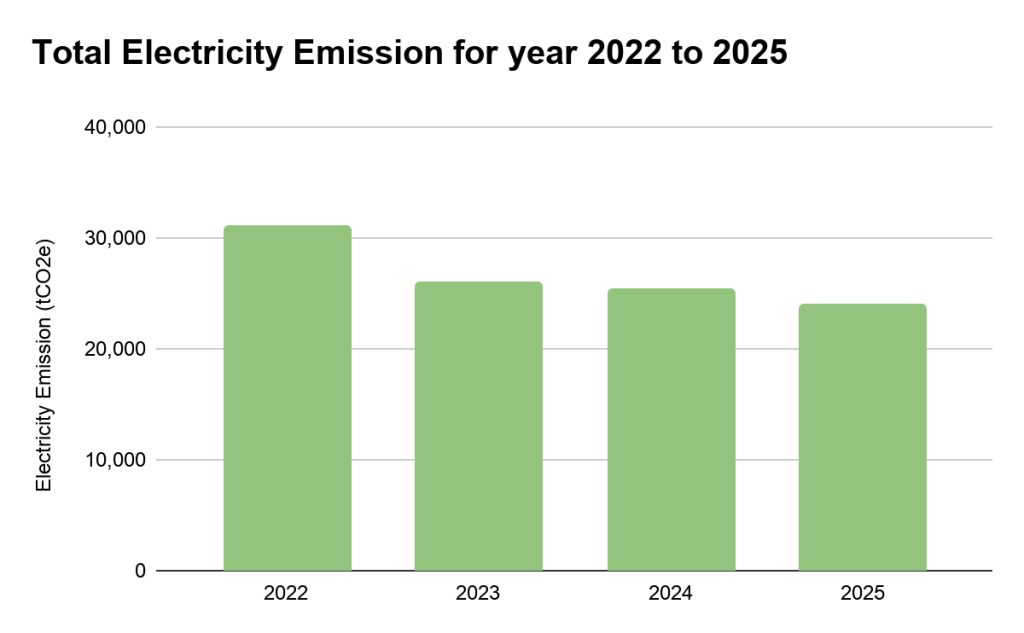
Based on the calculations, total emissions for Scope 2 in 2022 were 31,095.38 tCO2e. Calculations show 25,874.09 tCO2e for the year 2023. Besides, total emissions for Scope 2 in 2024 were 25,307.03 tCO2e and 23,991.54 tCO2e in 2025 . In 2025, electricity consumption at Universiti Kebangsaan Malaysia (UKM) recorded a significant decrease, from 59,426,702.00 kWh in 2024 to 56,271,212.00 kWh in 2025. This reduction reflects the university’s strong commitment to enhancing campus sustainability while actively reducing its environmental impact.
Several key initiatives were implemented throughout 2025 to support this effort. These include the wide-scale replacement of conventional lighting with energy-efficient LED lights across the campus, which significantly reduced electricity usage for lighting. In addition, older air-conditioning units were gradually replaced with more energy-efficient inverter systems, further improving energy efficiency in campus facilities. The periodic implementation of online teaching and learning, particularly during festive weeks, also contributed to lower energy consumption by reducing the use of physical campus facilities.
Through these strategic initiatives, UKM continues to optimize energy consumption and demonstrate its commitment to reducing Scope 2 carbon emissions, reinforcing its long-term vision of developing a low-carbon and sustainable campus environment. Detail on data breakdown for scope 2 for year 2022 to 2025 is shown in Table 3.
Table 3: Total electricity and carbon emission in 2022 to 2025| Year | (Baseline)2022 | 2023 | 2024 | 2025 |
| Electricity (kWh) | 71,286,969.28 | 60,746,125.00 | 59,426,702.00 | 56,271,212.00 |
| Total emission (tCO2eq) | 31,095.38 | 25,874.09 | 25,307.03 | 23,991.54 |
Scope 3
Scope 3 emissions refer to indirect greenhouse gas (GHG) emissions that occur outside an organization’s direct control but are linked to its operations. These emissions result from activities within the value chain, including upstream and downstream sources such as employee commuting, business travel, purchased goods, waste disposal and more.
For Scope 3 carbon emission, Universiti Kebangsaan Malaysia (UKM) has measured emissions from two key parameters: business travel and employee commuting. A total of 864 air travel trips were recorded under business and economy class. Additionally, UKM conducted a comprehensive staff commuting survey to assess daily travel patterns of employees. The emissions frombusiness travel (189.89 tCO2e) andemployee commuting (5433.95 tCO2e) add up to atotal of 5,623.84 tCO2e for Scope 3 emissions in 2024 (Table 4). Beside, in 2025 total Scope 3 is 5,684.12 tCO2e.
Table 4: Total carbon emission for Scope 3 in 2024 and 2025
| Category of Scope 3 | Total emission (tCO2eq) | |
| 2024 | 2025 | |
| Business travel | 189.89 | 220.75 |
| Employee commuting | 5,433.95 | 5463.37 |
| TOTAL | 5,623.84 | 5,684.12 |
Total Scope 1 and Scope 2 Emission
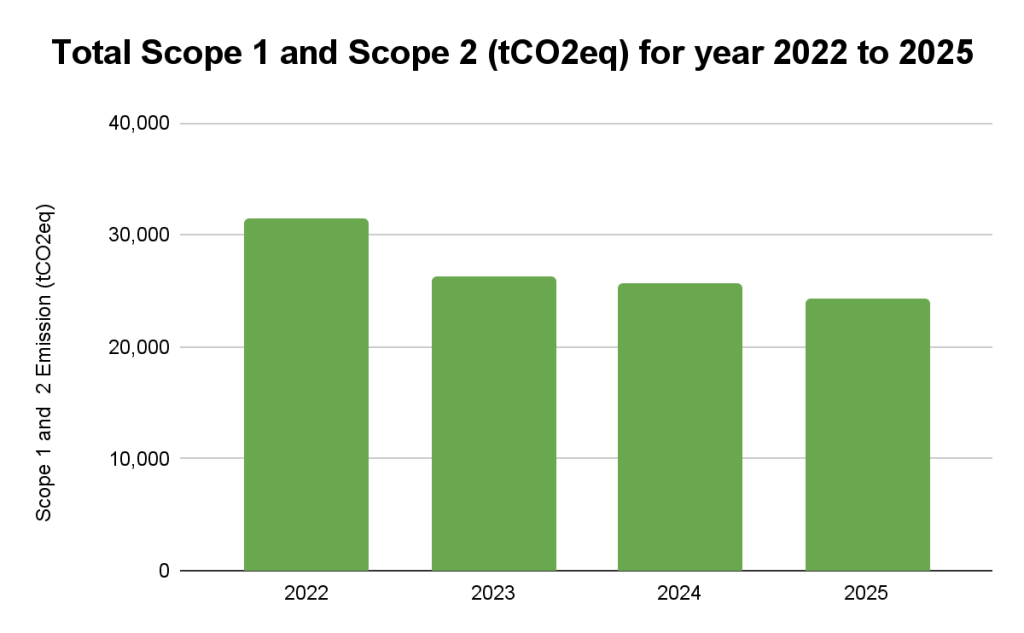
The combined emissions from both Scope 1 and Scope 2 for each year were shown in Table 5 and total carbon emission Scope 1 and Scope 2 per capita (tCO2eq) shown in Table 6.
Table 5: Total carbon emission Scope 1 and Scope 2 (tCO2eq) for year 2022 to 2025| Year | (Baseline)2022 | 2023 | 2024 | 2025 |
| Total scope 1 and scope 2 (tCO2eq) | 31260.98 | 26132.95 | 25553.92 | 24231.11 |
| Year | (Baseline)2022 | 2023 | 2024 | 2025 |
| Total scope 1 and scope 2 (tCO2eq) per capita | 1.068 | 0.897 | 0.865 | 0.829 |
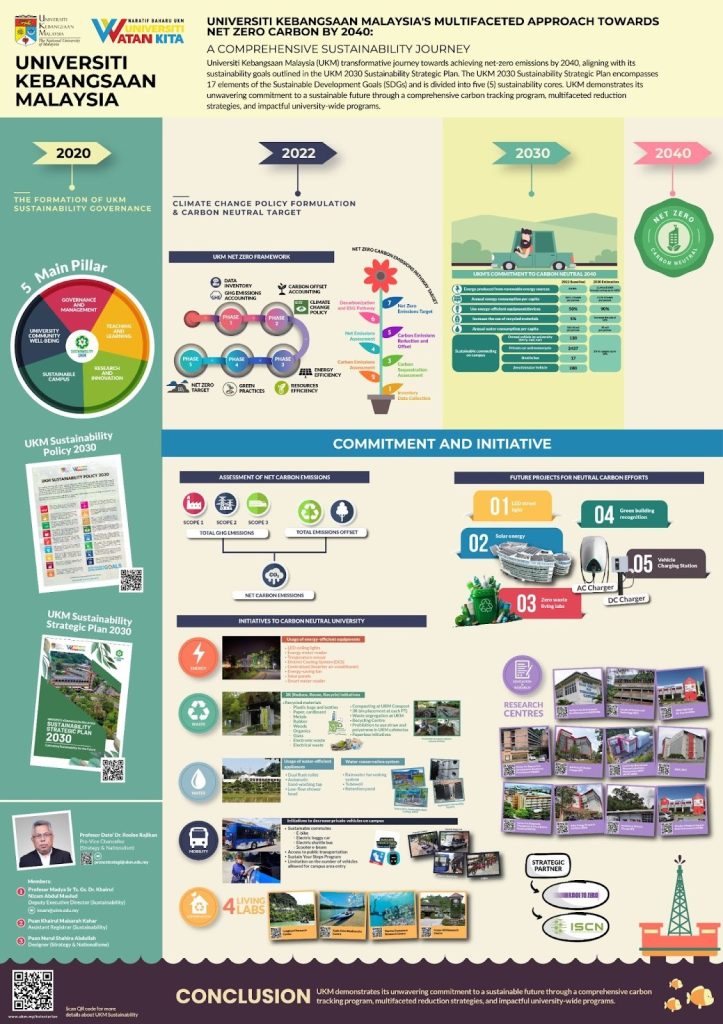
Universiti Kebangsaan Malaysia’s Multifaceted Approach Towards Net Zero Carbon by 2040
UKM’s progressive journey towards achieving net zero carbon emissions by 200, marked by significant milestones. In 2020, UKM initiated its commitment to sustainability by establishing a dedicated governance structure to oversee and guide its environmental efforts through UKM Sustainability Policy 2030 and UKM Sustainability Strategic Plan 2030. UKM Strategic Plan consists of 5 main pillars, which provide a strategic framework for achieving its ambitious environmental and social goals. The first pillar, Governance and Management, ensures that sustainability principles are embedded within UKM’s administrative structure and decision-making processes, promoting responsible leadership and accountability. The Sustainable Campus pillar focuses on transforming the physical environment of the university, fostering eco-friendly practices and infrastructure to reduce environmental impact. Through the Research and Innovation pillar, UKM encourages groundbreaking research that addresses climate change and environmental challenges, facilitating the development of sustainable technologies and solutions. The Teaching and Learning pillar underscores UKM’s commitment to educating students and staff on sustainability, integrating these topics into the curriculum to cultivate a culture of environmental consciousness. Lastly, University Well-being and Community emphasizes the university’s role in supporting the well-being of its students, faculty, and surrounding community, highlighting UKM’s dedication to social responsibility.
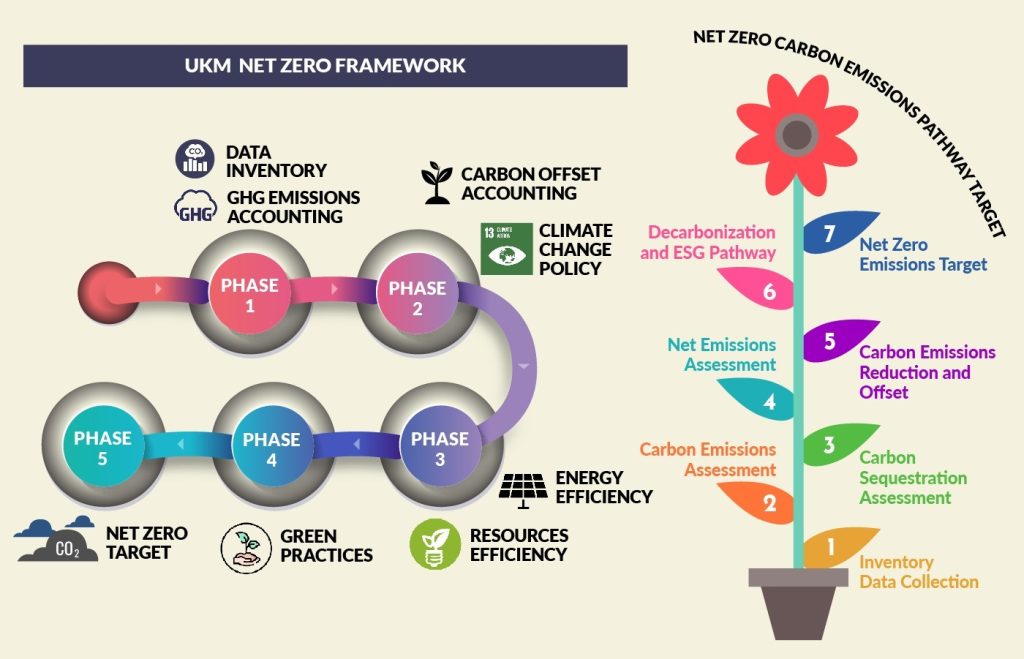
Building on this foundation, 2022 saw the introduction of a comprehensive climate change policy, along with the setting of an ambitious carbon neutrality target. In 2022, UKM advanced its sustainability agenda by implementing a Net Zero Framework, a structured roadmap designed to achieve carbon neutrality. This framework involves a phased approach, ensuring systematic progress toward net zero emissions. The initial phase focuses on data gathering to accurately assess carbon emissions across the campus, covering areas such as energy consumption, waste, and transportation. With a comprehensive understanding of its carbon footprint, UKM then moves to strategy development, identifying key areas where emissions can be effectively reduced. Subsequent phases include carbon offset initiatives and establishing a Carbon Neutral Campus Policy to formalize commitments and guide action. Further measures within the framework include emission reduction targets that are gradually introduced and adjusted based on UKM’s evolving sustainability needs. These targets encompass green practices like enhancing energy efficiency, adopting renewable energy sources, and encouraging sustainable behaviors among students and staff. This phased approach reflects UKM’s meticulous and data-driven strategy to ensure that every step taken is impactful and aligns with its long-term carbon neutrality goals.
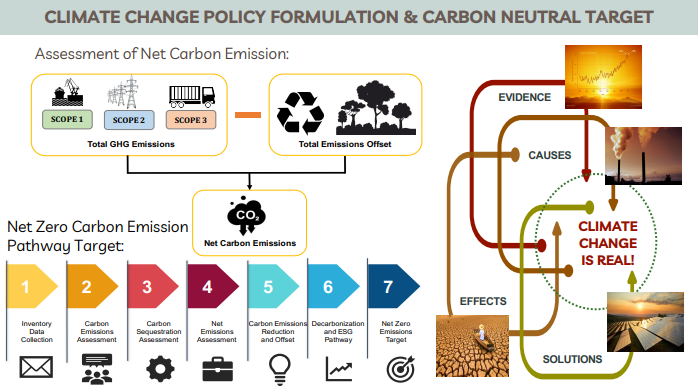
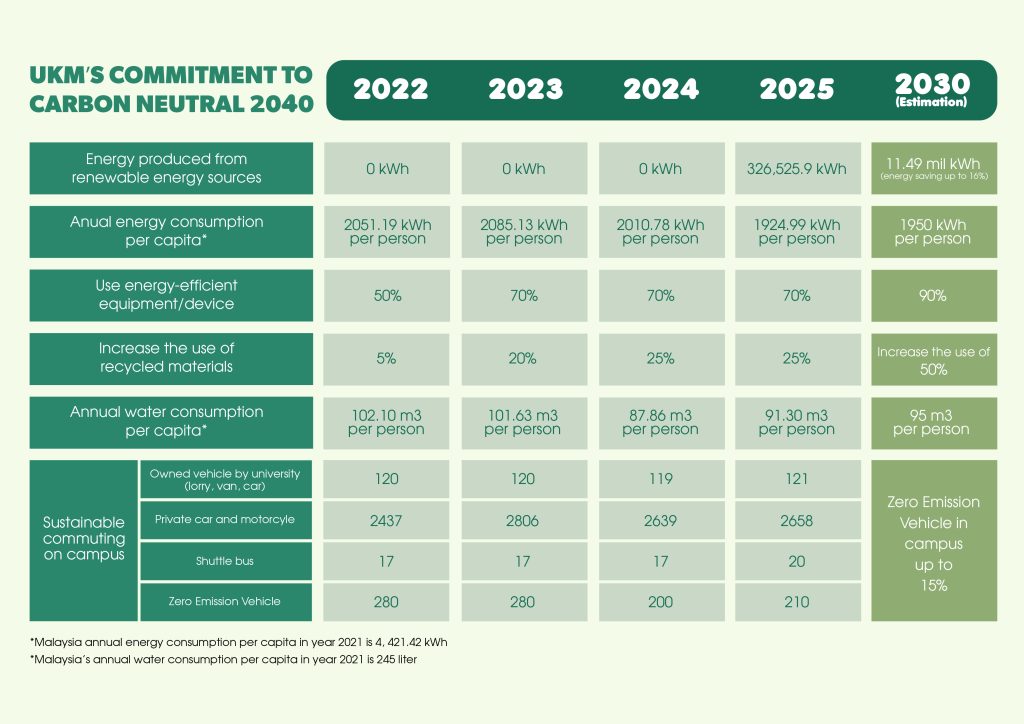
In 2030, UKM’s commitment to carbon neutral 2040 outlined a multi-faceted approach that includes a thorough Assessment of Net Carbon Emissions, a range of Initiatives to Carbon Neutral University, and forward-looking Future Projects to drive sustainable development across campus. The Assessment of Net Carbon Emissions categorizes emissions into three scopes: Scope 1 (direct emissions from university-controlled sources), Scope 2 (indirect emissions from purchased electricity), and Scope 3 (other indirect emissions such as those from commuting and waste). This comprehensive assessment enables UKM to measure its carbon footprint accurately and identify key areas where emission reductions can be implemented.
Building on this foundation, UKM has launched several Initiatives to Carbon Neutral University that focus on essential areas like energy conservation, waste management, water efficiency, and sustainable mobility. For instance, energy initiatives include the adoption of solar power, improved insulation in buildings, and LED lighting, while waste management efforts target reducing landfill contributions through composting, recycling, and the elimination of single-use plastics. Water-saving practices, such as rainwater harvesting and greywater recycling, contribute to resource conservation, and sustainable mobility is supported by electric buses and bicycles to minimize carbon emissions from transportation.
Looking ahead, UKM has ambitious Future Projects planned to bolster its carbon-neutral efforts. These projects include installing LED streetlights across the campus, expanding the electric bus fleet, establishing zero-waste laboratories, and earning green building recognition for campus facilities. Additionally, UKM is committed to creating a comprehensive network of charging stations for electric vehicles, supporting the transition to cleaner transportation options. Together, these assessment practices, ongoing initiatives, and future projects demonstrate UKM’s holistic and proactive approach to sustainability, underscoring its determination to reach carbon neutrality by 2040.
Commitment and Initiatives Towards Carbon Neutral University
UKM is on a path to carbon neutrality by 2040. Our roadmap includes a significant reduction in on-campus carbon emissions by 2030. To get there, UKM is implementing a comprehensive sustainability strategy targeting all emission scopes (1, 2, and 3). This multi-faceted approach minimizes our environmental impact across the entire university. Figure 7 to Figure 9 outline UKM’s ongoing efforts to achieve Net Zero by 2040.
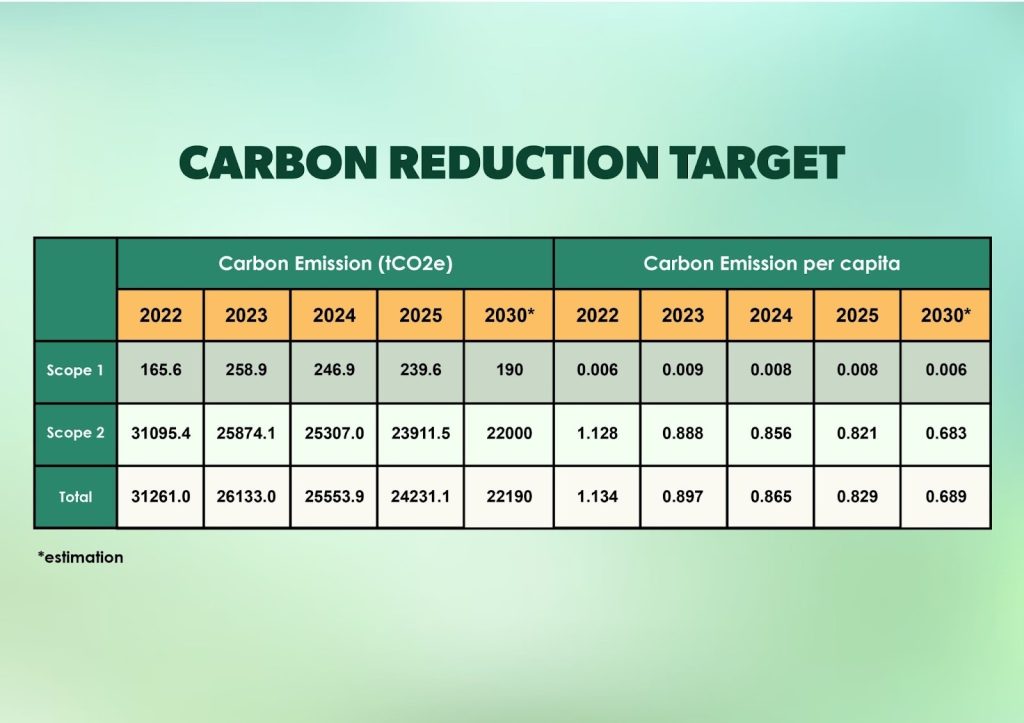
Carbon Reduction Target
UKM’s Carbon Tracking Program, which commenced in 2022, has been measuring the university’s greenhouse gas emissions following the GHG Protocol standard. We use these calculations to estimate future emissions, including projections for 2030, in order to track our progress towards achieving carbon neutrality by 2040. Figure 12 shows the carbon reduction target for UKM up to the year 2030.